

Before requesting a furniture quote, send enough information for the supplier to identify the product, quantity, specification, customization scope, and commercial basis. At minimum, include the product or reference image, quantity per item, main dimensions, material and finish direction, any upholstery or custom changes, and the destination or delivery basis.
You do not need every detail finalized. If something is still open, mark it as to be confirmed instead of allowing each supplier to make a different assumption. A clearer RFQ usually produces a clearer quotation and makes later supplier comparison more useful.
The Minimum Information to Include in a Furniture RFQ
A practical furniture RFQ does not need to be an engineering package. For a standard wholesale inquiry, the goal is to define the commercial product clearly enough for the supplier to quote the same requirement you intend to buy.
| RFQ Item | What to Send | Why It Matters |
|---|---|---|
| Product reference | Model number, product link, drawing, or reference image | Identifies the product direction |
| Quantity | Quantity per model, not only a total order quantity | Affects MOQ, unit cost, and production planning |
| Dimensions | Main overall dimensions and any size changes | Prevents suppliers from pricing different sizes |
| Main materials | Wood species and other major materials if known | Material assumptions can change cost and appearance |
| Finish | Color, stain, paint, sheen, or reference sample direction | Helps define the intended finish standard |
| Upholstery | Fabric, leather, color, performance direction, or reference | Different upholstery options can change cost and MOQ |
| Customization | State what should remain standard and what must change | Separates normal options from development work |
| Packing / assembly | Any known KD, assembled, carton, or special packing need | Can affect packing cost and shipment planning |
| Destination / trade basis | Country, port, delivery point, or requested trade term if known | Clarifies what commercial scope should be quoted |
| Timing | Target order date, required delivery window, or project deadline if relevant | Helps the supplier flag unrealistic timing early |
If you are still selecting products, start with the closest options in the Nestul product range and identify the models you want priced. A short, structured product list is usually more useful than a long message with mixed references and no quantities.
Start With a Clear Product Reference
The supplier first needs to know exactly which product you want quoted. The cleanest reference is usually a model number or product link. If you are sourcing from a reference image, send the image together with the main requirements that the image cannot show.
A photo can communicate style, but it may not define dimensions, wood species, frame thickness, seat construction, finish, upholstery, assembly method, or packing. If those points matter to the quotation, add them separately.
For buyers reviewing solid wood furniture, this is especially important because a visually similar chair or table can be produced with different material assumptions and specifications. The broader sourcing checks are covered in What Importers Should Check Before Buying Solid Wood Furniture from China; the RFQ itself should convert the relevant points into a quote-ready product brief.
State Quantity Per Model, Not Only the Total Order Quantity
“One container of furniture” is not enough for an accurate first quotation if the order contains several models. Suppliers need the approximate quantity of each item.
For example, a buyer may be considering 200 dining chairs, 40 leisure chairs, and 20 tables. That is more useful than stating a total of 260 pieces because each product type can have different production, packing, and MOQ logic.
If the quantity is not final, give a realistic range or an estimated quantity per model. It is better to write “about 100–150 pcs” than to leave the field blank and receive a price based on an assumption that does not match your buying plan.
Confirm Dimensions and the Specifications That Affect Cost
Furniture dimensions can affect material usage, structure, packing volume, and production feasibility. If the product is a standard model, the supplier can quote the standard size. If you need a different size, say so before the quotation is prepared.
You do not need to provide every measurement when asking about an existing supplier model. But for reference-based sourcing or modified products, confirm the dimensions that define the item: overall width, depth, height, seat height, table length, mattress size, or other dimensions that materially change the product.
When a size is still under review, mark it clearly as provisional. The objective is not to freeze every detail at the RFQ stage; it is to prevent two suppliers from quoting two different products without anyone noticing.
Separate Standard Options From Custom Changes
One of the most useful lines in a furniture RFQ is a simple distinction between standard product and requested change.
For regular wholesale orders, finish color, upholstery material, and upholstery color are often easier to review than deeper changes to size, structure, wood material, or major styling. Those deeper changes can affect MOQ, sampling, tooling, lead time, and the way the product needs to be checked before bulk production.
Nestul’s customization guidance follows the same logic: begin with a proven product where possible, then identify the adjustments that matter to your market. This gives the supplier a clearer basis for deciding whether the request can be quoted as a regular option or needs a separate development discussion.
Include Finish and Upholstery Direction Early
Finish and upholstery are frequent sources of quotation differences because “natural wood color,” “beige fabric,” or “brown leather” can refer to many different commercial options.
If you already have a finish swatch, Pantone reference, physical sample, fabric code, leather reference, or approved product photo, send it. If you do not, describe the direction and ask the supplier to propose available options.

At the RFQ stage, a reference direction is usually enough. Final color approval can happen later through swatches, samples, or an approved production reference. What matters now is that the quotation is not based on a finish or upholstery assumption you did not intend.
Tell the Supplier the Destination and Commercial Basis
A furniture quotation should make clear what commercial scope is being priced. If you already know the trade term you want—such as EXW or FOB—state it together with the relevant location or port. If you do not know yet, provide the destination country and ask the supplier to show the available quotation basis clearly.
This is not the stage for a full landed-cost model. The purpose is simply to prevent the product price and the logistics scope from becoming mixed together.
For project or time-sensitive orders, also mention the required delivery window. A supplier can then tell you whether the requested timing is realistic before the quotation becomes the basis for further negotiation.
Mention Packing, Assembly, Samples, or Documents When They Matter
Not every RFQ needs a long packing specification. But if you have a known requirement—knock-down packing, assembled shipment, retail-ready cartons, special edge protection, palletization, or another shipping constraint—include it early.
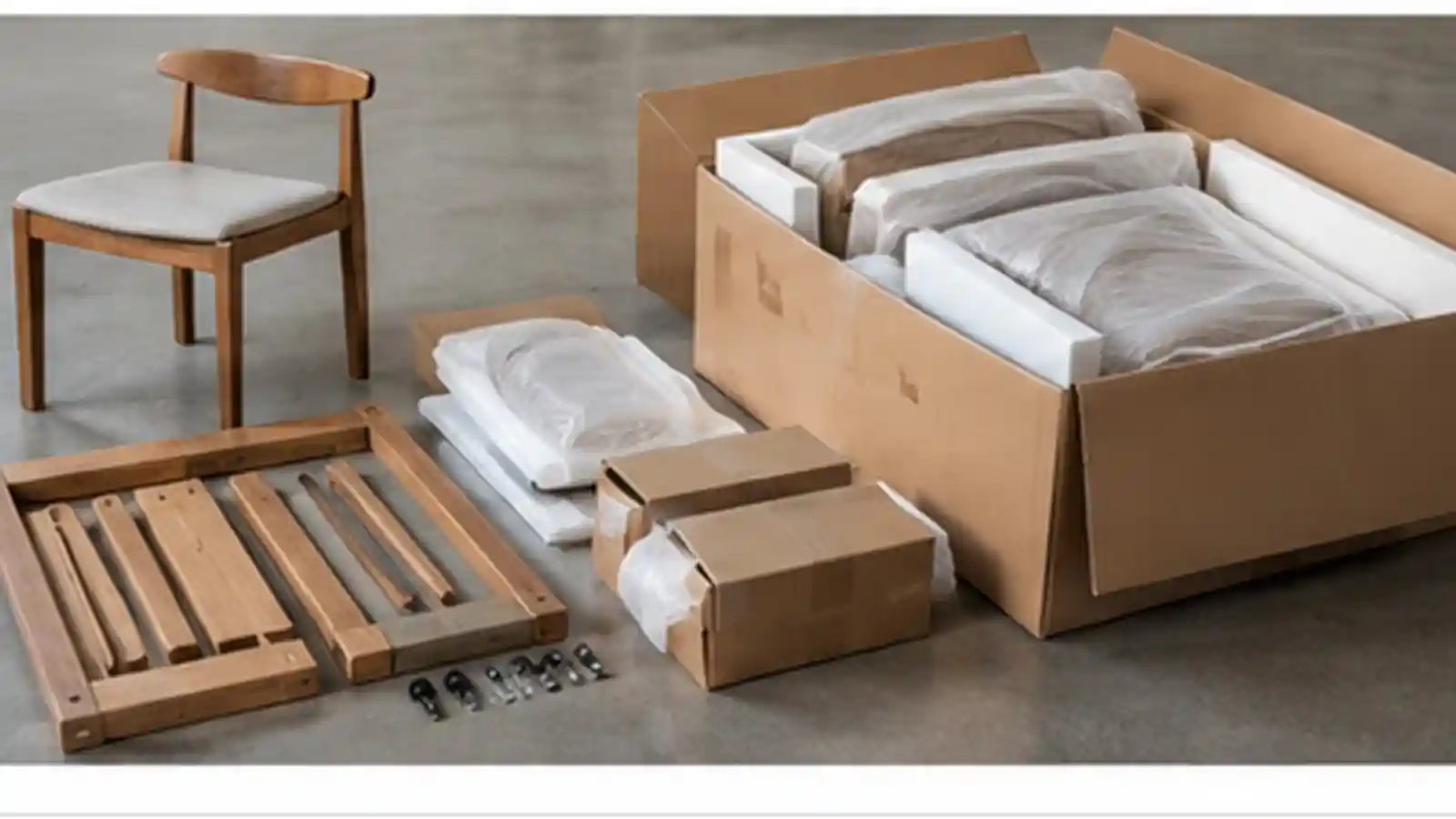
Likewise, tell the supplier if your quotation request should include a sample, finish swatch, material sample, third-party inspection arrangement, or buyer-specific documents. Requirements vary by order and destination, so do not assume every supplier is pricing the same extras unless they are stated.
For a closer look at how Nestul approaches inspection records and export protection, see Quality & Packing. These details become more important after the product and quotation basis have been aligned.
Mark Unknown Details as “To Be Confirmed”
A good RFQ does not pretend that every purchasing decision has already been made. Some information may genuinely be open: final finish code, exact fabric, logo placement, carton marks, target port, or order split by model.
Do not delete those fields. Mark them as to be confirmed, supplier to propose, or quote standard option first.
This gives the supplier permission to quote a defined assumption while keeping the open point visible. It is much safer than leaving a blank field that different suppliers may interpret differently.
Send the Same RFQ Basis to Every Supplier You Plan to Compare
If you are requesting quotations from several suppliers, use the same product references, quantity basis, specifications, customization notes, and commercial assumptions for each one.
This does not mean every supplier must offer the same solution. A supplier may recommend a different material, MOQ, packing method, or production approach. The key is that the differences become visible as supplier proposals rather than hidden assumptions created by an inconsistent RFQ.
The quotation-comparison stage comes after this. First create a clear input. Then compare how each supplier responds to that input.
A Simple Furniture RFQ Template Buyers Can Reuse
For many wholesale furniture inquiries, the following checklist is enough to start:
- Buyer / company name and target market
- Product model, link, drawing, or reference image
- Quantity per model
- Standard size or required dimensions
- Main material requirement
- Finish color or finish direction
- Upholstery material / color if applicable
- Requested custom changes
- Assembly and packing requirement if known
- Destination country / port and requested trade basis if known
- Target order or delivery timing
- Sample, inspection, or document requirements if already defined
- Open points marked “to be confirmed”
For a multi-model inquiry, put these fields into a spreadsheet with one row per product. Reference photos can be named with the same model code used in the sheet. That small amount of organization can remove a large number of clarification messages later.
Do Not Overload the First RFQ With Details That Do Not Affect the Quote
More information is not always better. A first RFQ should prioritize the details that change the product, price, MOQ, packing, or delivery scope.
Final carton artwork, production labels, complete QC tolerances, detailed after-sales procedures, and every market document may be important later, but they do not all need to be solved before a supplier can prepare an initial commercial quotation.
The practical sequence is: define the product and commercial basis first, identify open points, receive the quotation, then move the shortlisted option into sampling, specification confirmation, quality control, and order execution.
Prepare the RFQ So the Next Decision Is Easier
A useful furniture RFQ is not the longest document. It is the one that gives the supplier enough information to price the product you actually intend to buy and makes the remaining assumptions visible.
Product reference, quantity per model, dimensions, material, finish, upholstery, customization, destination, and any meaningful packing or timing requirements form the core. Everything that is still open can be marked for confirmation.
If you already have a product list, reference images, or a mixed furniture request, send the available details through the Nestul inquiry page. Include the quantities and the custom points you already know; the remaining items can be reviewed during quotation rather than guessed.
Furniture RFQ FAQ
What is the minimum information needed for a furniture quotation?
At minimum, send the product or reference image, quantity per model, main dimensions, material and finish direction, any upholstery or customization needs, and the destination or quotation basis. If an important detail is not final, mark it as to be confirmed.
Can a furniture supplier quote from only a reference photo?
Sometimes a supplier can provide a preliminary price direction from a photo, but the image does not define all specifications. Dimensions, material, finish, quantity, and any required changes should be confirmed before the quotation is treated as a reliable basis for comparison.
Should buyers include a target price in the RFQ?
A target price can be useful when it reflects a real commercial requirement, but it should not replace the product specification. The supplier still needs to know what product standard and order quantity the target is expected to cover.
What if the final quantity is not known yet?
Provide a realistic estimate or quantity range per model. This is better than leaving quantity blank because furniture pricing and MOQ logic can change significantly between a small trial order and a larger repeat-order program.
Do buyers need to specify the Incoterm before asking for a quote?
Not always. If you already know the required trade term and location, include them. If not, provide the destination country or port and ask the supplier to state clearly what quotation basis is being offered.
Should packing requirements be included in the first RFQ?
Include them when they are known and commercially important. Special packing, knock-down construction, retail-ready cartons, palletization, or additional protection can affect cost and shipment planning. If you have no special requirement, ask the supplier to quote its standard export packing and describe it.


