

Furniture export packing should be approved as part of the product specification, not left as a generic “export carton” note. Buyers should confirm the carton structure, internal protection, vulnerable points, hardware placement, knock-down layout, carton identification and shipment-specific reinforcement before the order is released.
The right packing depends on the furniture itself. A dining chair, glass-top table, upholstered sofa and knock-down bed do not face the same transport risks.
Start With the Product’s Most Vulnerable Points
Good packing is not simply more foam or a stronger carton. It puts protection where damage is most likely to occur.
- exposed corners and edges
- chair arms and backrests
- tabletop faces and edges
- glass or other brittle components
- finished surfaces that may rub against another part
- legs, rails or projections that can take impact
- upholstered areas vulnerable to compression or dirt
The packing review should start from those risks and then choose the carton and internal protection around them.

Confirm the Outer Carton Specification
The carton needs to suit the product weight, shape, handling route and stacking conditions. Buyers do not need to prescribe a universal carton grade for every order, but they should know what the supplier plans to use.
For Nestul’s core solid wood line, the normal direction uses five-layer corrugated cartons, with additional protection adjusted by product structure. This is a current supply practice for that core line, not a universal promise for every non-standard project.
If a customer has a specific carton-strength test, drop test, labeling rule or retailer packaging standard, it should be sent to the supplier before packing development.
Internal Protection Should Prevent Movement as Well as Impact
Many furniture damages occur because components move inside the carton and rub, strike or compress each other.
Depending on the product, internal protection may include edge protection, formed foam, separators, wrapped components, corner blocks, wooden reinforcement or other product-specific solutions.
The important question is not whether a supplier uses one particular material. It is whether the packed product is held securely and vulnerable surfaces are separated.
Knock-Down Furniture Needs a Component Map
Knock-down packing can reduce volume, but it creates additional risks: missing hardware, incorrect component pairing, surface contact and assembly confusion.
- Confirm which components are separated.
- Check protection between panels, rails or legs.
- Keep hardware in a clearly identified package.
- Verify that all required fittings and tools are included where specified.
- Make sure assembly instructions match the final production version if instructions are required.
Hardware Placement Should Be Checked Before the Carton Is Closed
A missing bolt or bracket can make an otherwise good shipment unusable. Hardware bags should be complete, protected from scratching finished parts and positioned so they can be found during receiving or assembly.
If the order contains several models, hardware identification becomes even more important. Use product codes or other clear marks so one model’s fittings are not confused with another.
Carton Marks Are Part of Receiving Control
Carton marks help warehouses identify what has arrived without opening every box.
Depending on the buyer’s operation, useful information can include:
- product code
- product name
- finish or upholstery reference
- carton sequence where a product uses multiple cartons
- quantity per carton
- buyer barcode or shipping mark when required
Buyer-specific labeling should be approved early enough to be incorporated into production rather than added manually at the last minute.
Packing Affects Container Loading
Carton dimensions determine shipment volume. Changing from assembled to knock-down packing can change the container plan, while extra protection can increase carton size.
For mixed-category orders, confirm the actual carton list before finalizing loading. Heavy compact cartons and large upholstered cartons may need different positions and stacking rules.
See Mixed Furniture Container Orders for the relationship between SKU mix, MOQ and container planning.
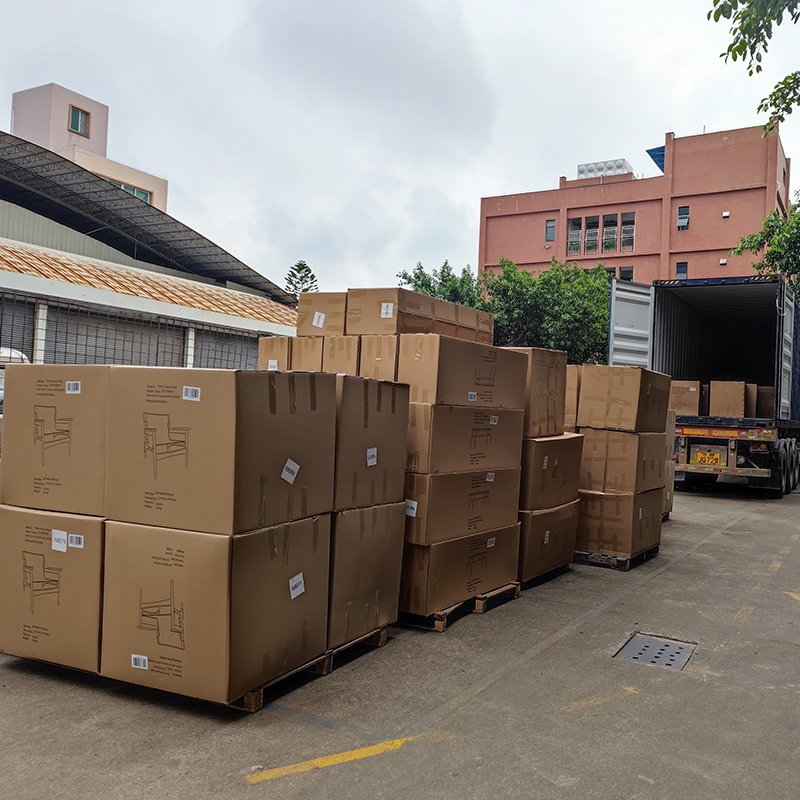
Packing Should Be Included in Pre-Shipment Inspection
Do not inspect only the furniture and assume the packing is correct. The final review should verify carton condition, protection, accessories, marks and packing completeness.
For Nestul’s core solid wood line, products are photographed before shipment and identified for record keeping. Quality checks are carried out at the unfinished-frame stage, after finishing and before packing. These records help connect the packed shipment back to the approved order.
The wider inspection sequence is covered in Furniture Quality Inspection Checklist Before Shipment.
Do Not Confuse Factory Packing With Freight Insurance
Protective packing reduces transport risk, but it does not remove every possibility of damage in international freight. Buyers should separately confirm cargo insurance, carrier responsibilities and claim procedures with their forwarder or insurer.
Where the shipment uses an Incoterms rule, understand how freight and insurance responsibilities are allocated. See EXW, FOB and CIF for Furniture Importers for that commercial layer.
Furniture Export Packing Checklist
- Carton construction matches the product and shipment route.
- Vulnerable edges, corners and surfaces are protected.
- Components cannot move excessively inside the carton.
- Knock-down parts are separated and identifiable.
- Hardware and accessories are complete.
- Carton dimensions and counts match the loading plan.
- Shipping marks and product codes are correct.
- Special buyer labeling is applied where required.
- Packing condition is included in pre-shipment records.
Final Takeaway
Furniture export packing is part of product quality because it determines whether the approved furniture can survive handling and arrive identifiable and complete. The most useful packing specification is product-specific, documented and checked before shipment.
If you are reviewing a Nestul order, send the product codes, quantity, destination and any buyer-specific packing or labeling requirements through the inquiry page. The packing approach can then be reviewed against the actual product structure.
Furniture Export Packing FAQ
What type of carton should be used for export furniture?
There is no single carton specification for every furniture type. It should match product weight, geometry, protection needs and the buyer’s shipping or retailer requirements.
Is knock-down packing always better?
No. It can reduce volume, but it adds component, hardware and assembly-control requirements. The right choice depends on the product and supply model.
Should buyers inspect packing before shipment?
Yes. Check the carton, internal protection, hardware, marks and completeness as part of the final inspection.
Does strong packing guarantee there will be no freight damage?
No. Good packing reduces risk but cannot control every handling or transport event. Freight arrangements and cargo insurance should be reviewed separately.