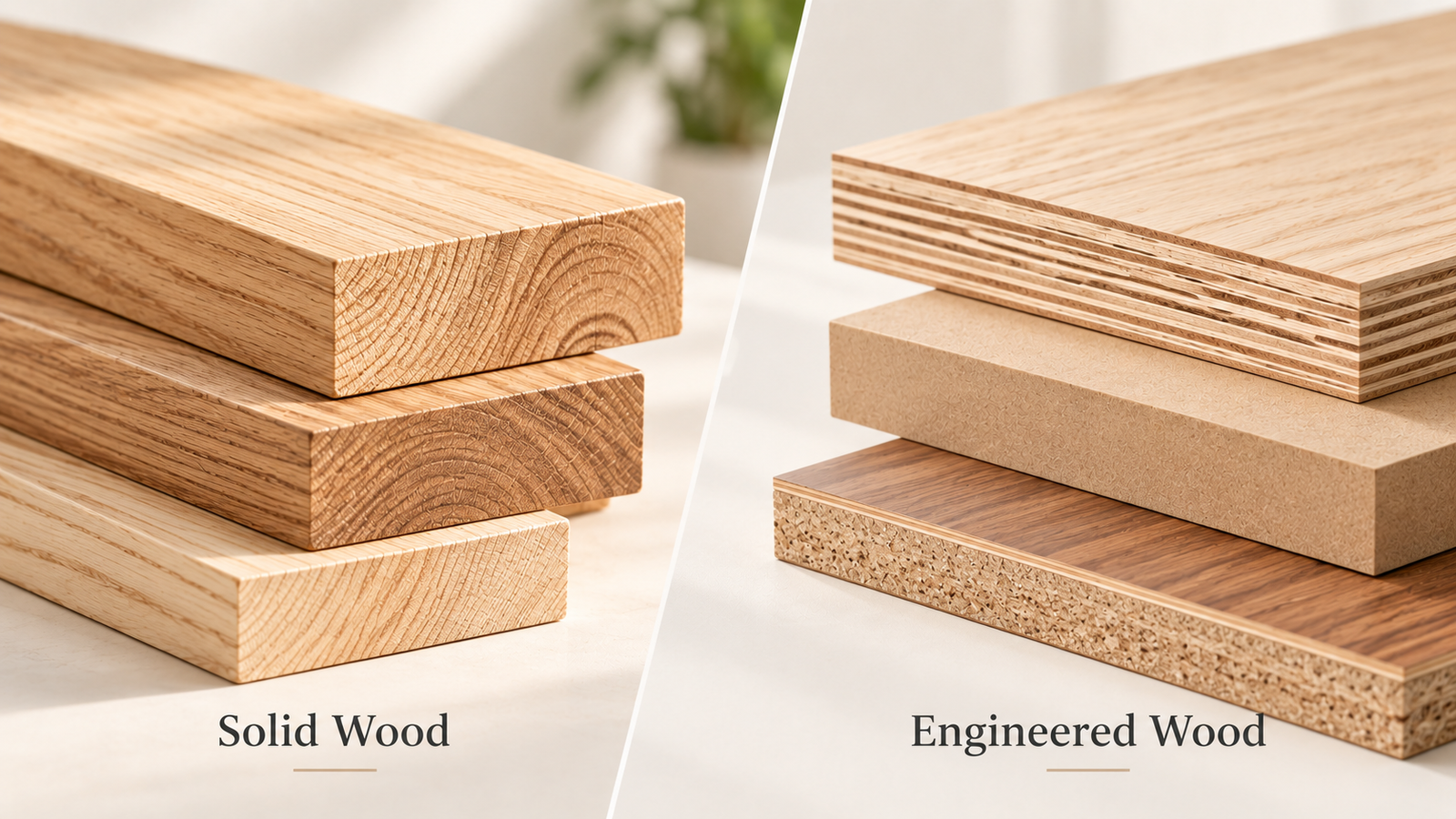
Solid wood and engineered wood are not “good” and “bad” versions of the same furniture material. They solve different product, cost, appearance, stability, and maintenance problems. For wholesale buyers, the better choice depends on the product category, target market, expected price position, construction, and how clearly each component is specified.
The most important sourcing rule is to compare the actual construction—not just the marketing label. “Engineered wood” can mean plywood, MDF, particleboard, or a veneered panel, and those materials do not perform the same way. A mixed construction can also be commercially appropriate when each material is used for a clear reason.
Start by Separating the Material Terms
Before comparing quotations, buyers should make sure the material descriptions mean the same thing.
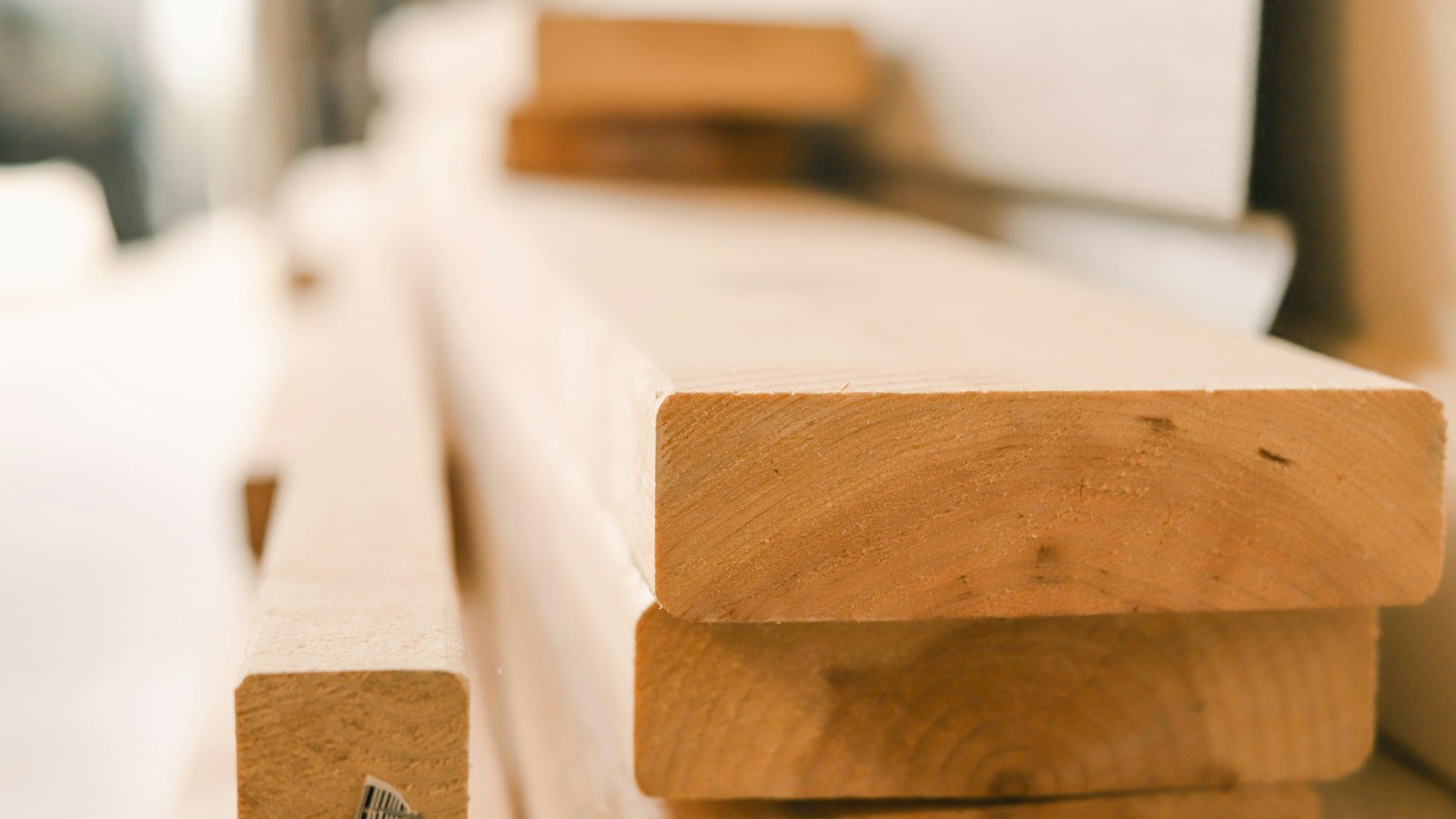
- Solid wood means the specified component is made from natural timber rather than a reconstituted board.
- Plywood is made from layers of wood veneer bonded together, usually with alternating grain direction.
- MDF is a fiber-based panel made from refined wood fibers and resin, pressed into a dense, uniform board.
- Particleboard is made from wood particles bonded into a panel and is commonly used where cost and panel efficiency matter.
- Wood veneer is a thin layer of real wood applied over another core such as plywood or MDF.
The USDA Forest Products Laboratory’s Wood Handbook treats wood-based composite panels as a separate material family and also discusses how moisture affects dimensional change in solid wood. For furniture buyers, that distinction matters because the material name influences construction, appearance, production behavior, and long-term use.
The Buyer’s Comparison Is Really About Product Positioning
For a wholesaler or distributor, material choice is not only a technical question. It also determines where the product sits in the market.
Solid wood usually supports a product story built around natural grain, tactile material, repairability, visible joinery, and long-term ownership. Engineered wood can support a different commercial position: more controlled panel construction, smoother painted surfaces, efficient large flat parts, and a lower or more predictable material cost in some designs.
Neither positioning is automatically stronger. The problem starts when the product is marketed as one thing but specified as another, or when buyers compare two quotations without confirming which parts are solid wood, veneered, plywood, MDF, or particleboard.
Appearance: Natural Variation vs Controlled Consistency
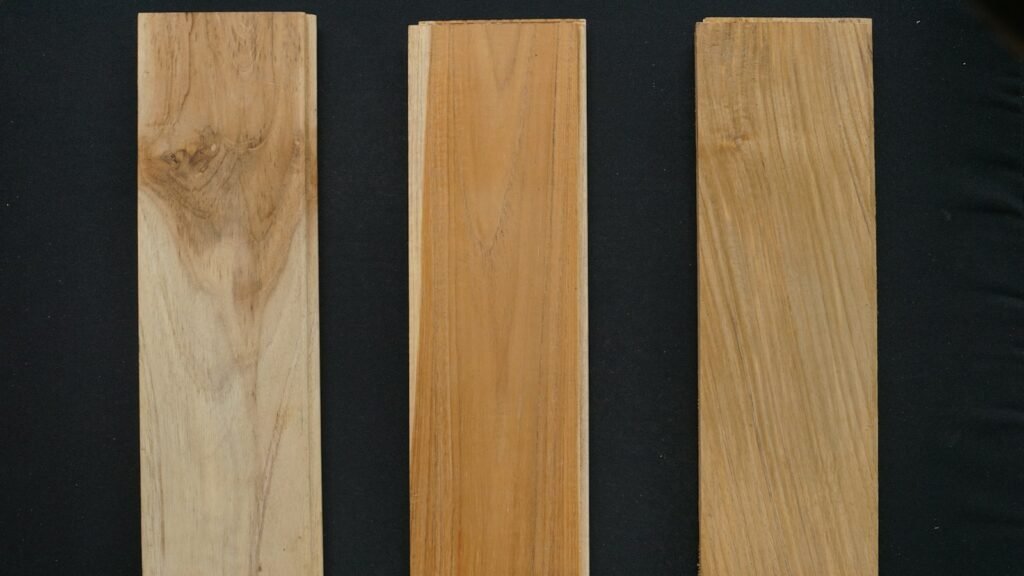
Solid wood naturally varies in grain, color, figure, and small visual details. That variation is part of the material rather than a production defect by itself. For buyers selling into markets that value natural material character, this can be a major advantage.
But natural variation also means that a wholesale order should define what level of variation is commercially acceptable. “Ash wood” or “oak” alone does not tell the supplier how clean the visible areas should look, how much color variation is acceptable, or how the grain should be presented across a batch.
Engineered panels can make visual consistency easier when the surface is painted, laminated, or covered with selected veneer. However, the final appearance still depends on the surface layer, edge treatment, finish system, veneer matching, and production standard. A veneered MDF panel and a low-cost printed surface are both “engineered” constructions, but they are not comparable products.
Dimensional Behavior: Solid Wood Moves More With Moisture
Solid wood gains and loses moisture as environmental conditions change, and that causes dimensional movement. Good furniture construction allows for this behavior through material preparation, joinery, panel design, and finish control.
Engineered panels are designed differently and can offer greater dimensional consistency for large flat surfaces. That is one reason plywood, MDF, or veneered panels are common in cabinets, case goods, doors, backs, tabletops, and other panel-based products.
For wholesale buyers, this does not mean “engineered is always more stable, therefore better.” It means the construction should match the product. A solid wood chair frame and a large cabinet side panel solve different structural and production problems.
Repairability and Product Life Are Different Questions
Solid wood often has an advantage when the surface needs to be repaired, sanded, or refinished, because the material continues below the surface. This can be useful for higher-positioned furniture, long ownership cycles, or products expected to develop wear over time.
With veneered products, repair options depend on veneer thickness, finish type, edge construction, and the location of the damage. MDF and particleboard also behave differently from plywood when edges, fasteners, or moisture-damaged areas need repair.
Wholesale buyers should therefore avoid a simple “which material lasts longer?” question. A better question is: what type of wear is likely in the target market, and what kind of repair or replacement model does the business expect?
Cost: Compare the Whole Construction, Not a Material Label
Solid wood can require higher material cost, more selection, more machining, and more attention to natural variation. Engineered panels can reduce material cost in some products, but the final quotation also depends on veneer, laminate, edge banding, hardware, machining, finishing, labor, assembly, packing, and order quantity.
That is why a quotation described as “solid wood furniture” should not automatically be compared against an “engineered wood” quotation as if the only difference is price.
Buyers should first align:
- which components are solid wood
- which components use plywood, MDF, particleboard, or another core
- whether visible surfaces use real wood veneer, laminate, paint, or another finish
- edge construction
- hardware and fastener requirements
- product dimensions and thicknesses
- finish standard
- quantity and customization scope
If those points are different, the prices represent different products. The same comparison discipline applies when reviewing multiple suppliers, as explained in 7 Mistakes Importers Make When Comparing Furniture Quotations from Different Suppliers.
Solid Wood Is Often Strongest When the Material Is Part of the Product Story
Solid wood is especially relevant when buyers want the material itself to be visible and commercially meaningful.
- Dining chairs and leisure chairs with exposed wooden frames
- Tables where natural grain and edge detail are part of the design
- Products positioned around natural material, craftsmanship, or repairability
- Furniture intended for repeat-order programs where the buyer wants a stable material direction across seasons
Nestul’s core product direction is built around solid wood furniture for wholesale buyers, particularly chairs, leisure chairs, tables, and selected furniture pieces. In this type of product line, wood selection, visible surface quality, sanding, finish consistency, and repeat-order references matter because the material is part of what the buyer is selling.
Engineered Wood Is Often Strongest When Panel Efficiency Matters
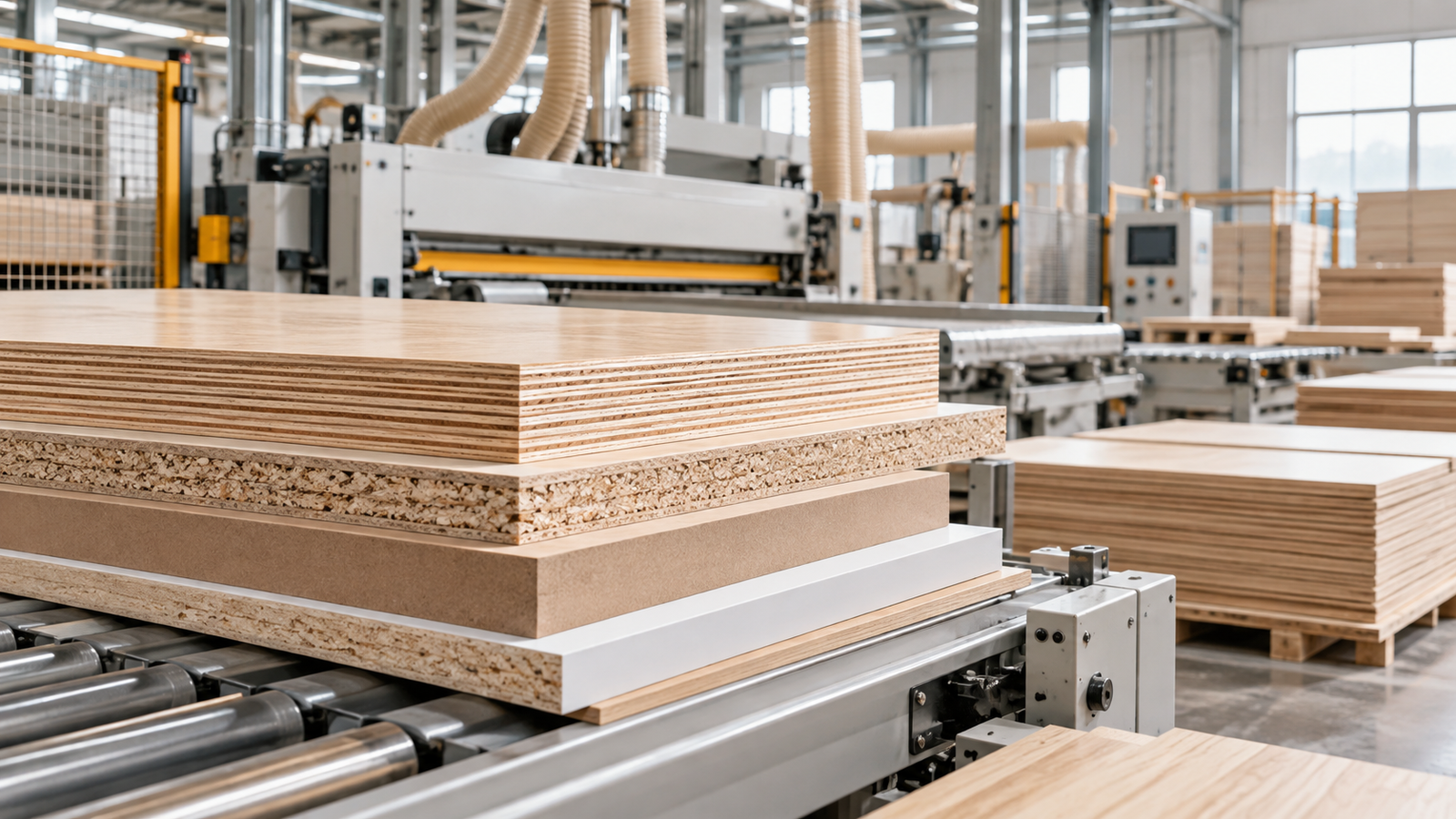
Engineered wood can be a practical choice when the design includes large flat panels, painted surfaces, controlled veneer layouts, or cost-sensitive case goods.
Plywood may be selected for strength and layered construction. MDF can be useful where a smooth, uniform surface is needed for paint or veneer. Particleboard can work in price-sensitive products or internal components when the construction and use case support it.
The key is not to treat these materials as interchangeable. Buyers should specify the panel type, thickness, surface, edge treatment, and where the material is used in the product.
Hybrid Construction Can Be the Correct Specification
Many well-designed furniture products combine materials. A product might use solid wood for legs and frames, plywood for a structural seat panel, veneer over a stable panel for a large surface, or another material in a hidden non-structural area.
A hybrid construction is not automatically a quality compromise. It becomes a sourcing problem only when the material mix is unclear, inconsistent with the buyer’s product positioning, or changed without approval.
For importers and distributors, the practical rule is simple: specify the important components separately. Avoid a one-line material description when the product uses several constructions.
What Wholesale Buyers Should Ask Suppliers to Confirm
Before approving a quotation or sample, ask for a component-level material description.
- What is the main frame material?
- Which visible components are solid wood?
- Are any panels plywood, MDF, particleboard, or another board?
- If veneer is used, what is the core material?
- How are panel edges finished?
- Which components carry structural load?
- What finish reference will be used for approval?
- What natural variation is acceptable on visible solid wood?
- Will the same construction be retained for repeat orders?
For a broader pre-order review, the checklist in What Importers Should Check Before Buying Solid Wood Furniture from China covers material, finish, structure, MOQ, quality control, packing, and repeat-order consistency.
Choose the Material That Matches the Business Model
For wholesale furniture, the best material is the one that fits the product promise, target price position, construction, use environment, and repeat-order plan.
Choose solid wood when natural material character, visible grain, repairability, exposed construction, and a stronger solid-wood product identity are important. Consider plywood, MDF, particleboard, or veneered panels when the design benefits from panel construction, controlled surfaces, or a different cost structure.
Most importantly, do not buy a material label. Buy a clearly defined construction.
If you are building a wholesale range and need to compare solid wood product options, review the Nestul product categories or send your target product type, quantity, finish direction, and market requirements through the inquiry page. The material decision is easier when it is tied to a real product and order structure.
Solid Wood vs Engineered Wood Furniture FAQ
Is engineered wood always cheaper than solid wood?
No. Engineered construction can reduce material cost in some products, but the final furniture price also depends on veneer, panel grade, hardware, machining, finish, labor, packing, order quantity, and design complexity. Compare complete specifications, not only the material label.
Is plywood considered engineered wood?
Yes. Plywood is an engineered wood product made from bonded layers of wood veneer. It should still be distinguished from MDF and particleboard because their construction and performance are different.
Can engineered wood furniture use real wood on the surface?
Yes. Real wood veneer can be applied over plywood, MDF, or another core. The visible surface may be real wood even though the complete panel is not solid wood.
Which material is better for wholesale dining chairs?
There is no universal answer, but solid wood is common when the chair design relies on an exposed wooden frame, visible grain, and a natural-material product position. Some chair constructions also use plywood or other engineered components in seats, backs, or hidden structural areas. The component-level specification matters more than a single label.
What should buyers confirm before ordering veneered furniture?
Confirm the veneer species, core material, panel thickness, edge construction, finish reference, visible grain direction, and which components are veneered rather than solid. For repeat orders, keep the approved construction and finish reference on file.