Furniture MOQ is not a fixed industry number. It changes because different products, materials, finishes, customization levels, production setups, and order structures create different minimum workable batch sizes.
For wholesale buyers, the useful question is not only “What is your MOQ?” but “What is driving the MOQ for this specific product and this specific change?” Once that is clear, buyers can decide whether to use a standard product, combine models, increase quantity, simplify the customization, or treat the request as a separate development project.
MOQ Means the Minimum Commercially Workable Order
MOQ stands for minimum order quantity. In furniture sourcing, it is usually the minimum quantity a supplier is prepared to produce under a defined product specification and commercial condition.
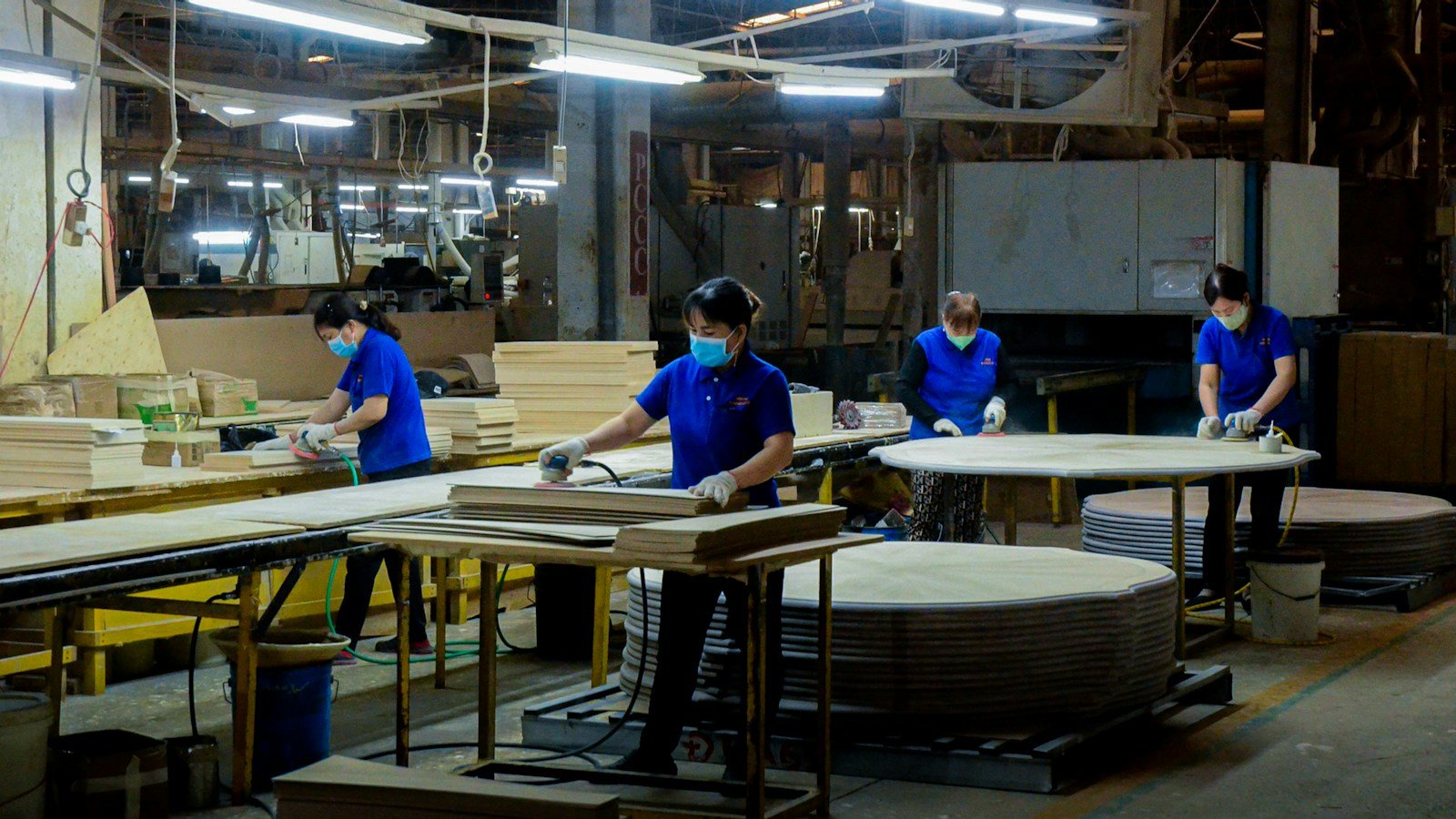
The number is not only about factory preference. A batch may need to absorb material purchasing, machine setup, jigs, color preparation, upholstery cutting, packaging, labor organization, sampling, and quality-control work. If the quantity becomes too small, the unit cost or production disruption can become commercially impractical.
This is why two similar-looking furniture products can have different MOQs, and why the same product can have one MOQ as a standard item and another MOQ after a major customization request.
Why Product Type Changes MOQ
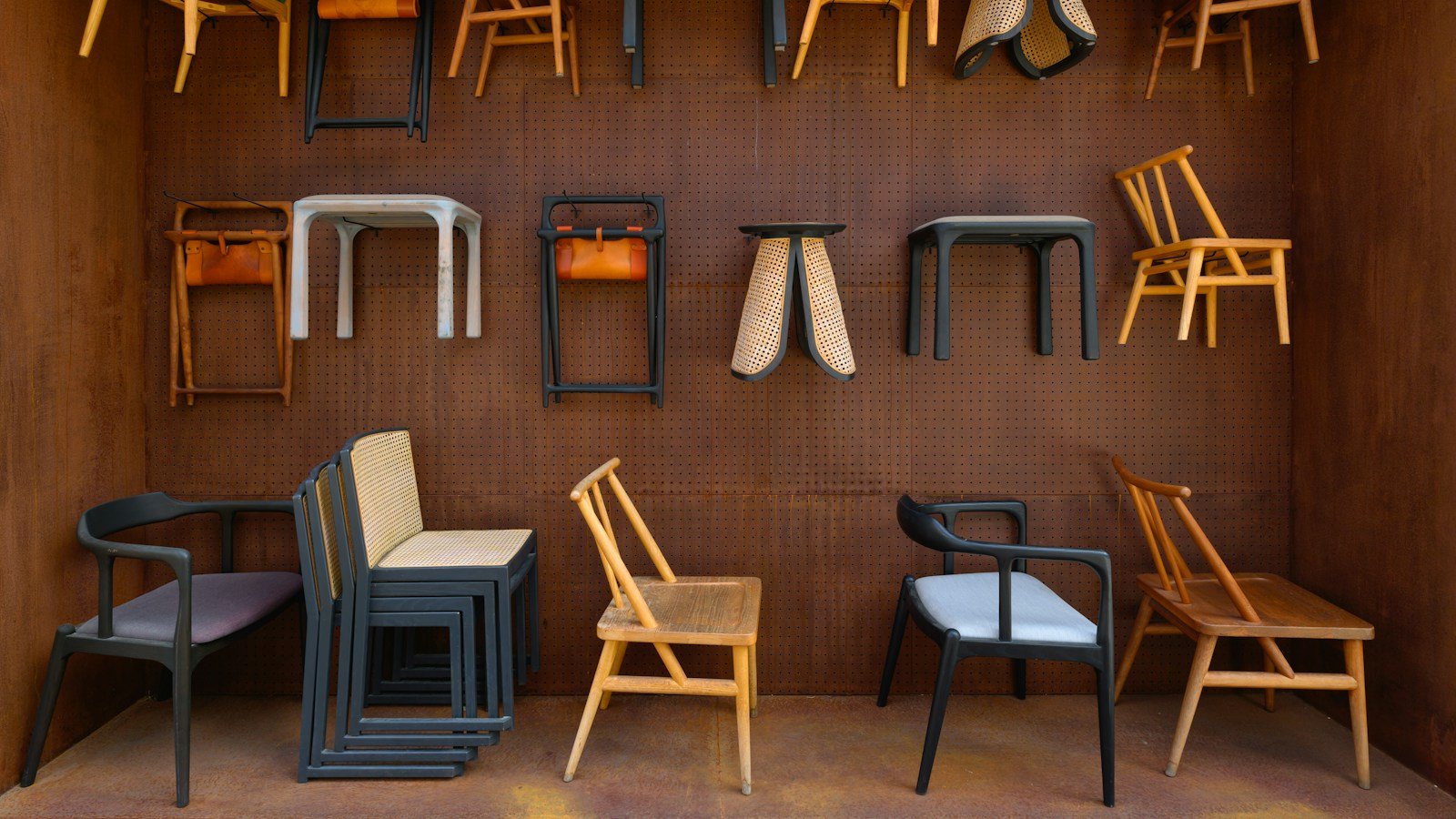
A dining chair, large dining table, lounge chair, cabinet, bed, and sofa do not follow the same production logic.
Chairs often involve many repeated solid-wood components, machining steps, joinery, sanding, finishing, and upholstery operations. A larger batch can make those repeated processes more efficient.
Large tables or beds may have a higher unit value and fewer pieces per shipment, so the supplier may be able to review a smaller quantity—especially when the request stays close to the standard product structure.
This means a buyer should ask for MOQ by product category and by model, rather than assuming one company-wide number applies to everything.
Standard Products Usually Have the Simplest MOQ Logic
The easiest order to quote and produce is usually an existing product with an established structure, material direction, finish process, and packing method.
For a standard model, the factory already understands:
- the component dimensions
- the machining and assembly sequence
- the normal material usage
- the finish process
- the packing method
- the expected production risks
That usually makes a standard item more suitable for trial orders and first cooperation than a heavily modified product.
This is also why Nestul’s general customization approach is standard products first, practical custom support second. A proven product gives the buyer a clearer starting point before adding changes that may affect MOQ, cost, or lead time.
Regular Finish and Upholstery Options Are Different From Deep Customization
Not every customization request should be treated as a new product development project.
For regular furniture orders, finish color, upholstery material, and upholstery color can often be reviewed as normal product options. These changes may still need minimum quantities depending on the item, fabric source, color preparation, and order structure, but they generally create less disruption than changing the product itself.
Deeper changes can create a different MOQ because they may require new drawings, new dimensions, new cutting data, structural review, additional samples, different material purchasing, new packing, or changes to the production sequence.
Size, Structure, Wood Material, and Major Style Changes Usually Raise the MOQ
These changes should be separated from normal finish options:
- changing the overall size in a way that affects structure
- changing frame thickness or load-bearing components
- changing joinery or assembly method
- changing the wood species or main material
- changing a major design feature
- developing from a reference image or drawing
- creating a new packaging solution because the product geometry changed
The more a request changes the original production logic, the less useful it is to discuss MOQ as if the buyer were ordering a standard model.

MOQ Can Apply Per Model, Per Color, or Per Material
A buyer may say, “I can order 200 pieces,” but the supplier may still need to know how those 200 pieces are divided.
For example, 200 chairs may mean:
- 200 pieces of one model in one finish
- four models at 50 pieces each
- one model in four different finish colors
- two frame colors with several upholstery materials
Those order structures do not create the same production efficiency. Material purchasing, color setup, upholstery cutting, carton marking, and production scheduling can all become more fragmented as the number of variants increases.
When requesting a quotation, provide the quantity per model and per major option. The Furniture RFQ Checklist explains how to structure that information before comparing supplier quotations.
Material Purchasing Can Create Its Own Minimum
Some MOQ pressure comes from the material supply chain rather than the furniture assembly line.
A special fabric, leather-look material, uncommon wood species, custom hardware, unusual finish chemical, or dedicated packaging component may have its own supplier minimum. The furniture factory may be willing to make a small number of pieces but still need to purchase more material than the order consumes.
In that situation, buyers can ask whether the unused material can be carried into a repeat order, whether a standard material can replace the special option, or whether the additional material cost can be separated from the product price.
Sampling Cost and MOQ Are Related, but They Are Not the Same Thing
A sample may require one-off labor, material preparation, drawing review, jig adjustment, finish development, or packaging review. A supplier can charge a sample or development fee even when the future bulk-order MOQ is much higher.
Likewise, paying for one sample does not automatically mean the factory can economically produce five or ten units under the same bulk pricing structure.
Buyers should therefore confirm three separate items:
- sample or development cost
- bulk-order MOQ
- whether sample cost can be credited or handled differently after the bulk order is confirmed
Why MOQ Often Changes During Quotation
MOQ can change because the buyer’s requirement changes.
A supplier may first quote a standard dining chair at one quantity. The buyer then asks for a new width, a different wood species, custom upholstery, a new finish, and revised packing. At that point, the original MOQ is no longer describing the same product.
This is not necessarily a sign that the supplier is changing terms arbitrarily. The useful check is whether the supplier can explain which requirement changed the production condition.
The same principle applies when comparing suppliers. If Supplier A quotes the standard model and Supplier B quotes a modified product, the numbers are not directly comparable. See 7 Mistakes Importers Make When Comparing Furniture Quotations from Different Suppliers for a broader comparison framework.
Nestul’s Current MOQ Logic for Deeper Product Changes
For Nestul’s regular solid wood supply, finish color, upholstery material, and upholstery color are treated as the first layer of practical customization. Deeper changes are reviewed separately.
As a current working reference for deeper changes such as size, structure, wood material, or major style adjustment:
- Dining chairs: typically 50+ pieces.
- Tables, leisure chairs, and coffee tables: typically 30+ pieces.
These are working MOQ rules for the relevant customization scope, not universal promises for every model or material. Final feasibility still depends on the actual product and requested change.
Selected Large Standard Products Have a Size-Adjustment Exception
There is an important exception for selected standard products when the request is only a size adjustment based on the original product structure.
For selected dining tables or larger tables, large sofas, and beds, size adjustment may be reviewed without the usual customization MOQ. An RMB 600 customization fee applies.
This exception does not mean unlimited custom development. Structural changes, material changes, major style changes, complex processes, and non-standard project development still require separate review based on quantity and production feasibility.
How Buyers Can Work With MOQ Instead of Fighting It
If the supplier’s MOQ is higher than the buyer’s initial plan, there are several practical options to review before abandoning the product.
- Use the standard product first. Remove structural or material changes and test the market with a proven version.
- Reduce the number of variants. One finish or one upholstery can be easier than several small color batches.
- Concentrate quantity on fewer models. A smaller SKU count can make the same total order more production-friendly.
- Choose an existing material. Avoid a special fabric, hardware, or wood species that creates a separate supplier minimum.
- Separate the sample from the bulk MOQ discussion. Pay for development where commercially justified, then confirm the realistic bulk quantity.
- Ask which change creates the MOQ. Sometimes removing one difficult requirement changes the entire production condition.
What Buyers Should Send When Asking About MOQ
- product model, link, drawing, or reference image
- estimated quantity per model
- standard size or requested size
- wood species or main material requirement
- finish color
- upholstery material and color if applicable
- the exact points that need to change from the standard product
- target market or application
That information lets the supplier explain whether the request fits a normal wholesale order, a regular option, an MOQ-based change, or a separate development project.
Final Takeaway
Furniture MOQ is a production and commercial boundary, not just a number on a price list. It changes with product type, quantity per model, material purchasing, finish options, variant count, structural changes, sampling, and packaging.
For a first order, the most efficient path is usually to begin with a proven product, keep the number of variants controlled, and separate regular finish or upholstery options from deeper product development.
If you have a product list and target quantity, send the models, quantity per item, and requested changes through the Nestul inquiry page. The MOQ can then be reviewed against the real order rather than guessed from a generic number.
Furniture MOQ FAQ
Why do different furniture products have different MOQs?
They use different materials, components, production steps, setup requirements, and packing methods. A repeated chair frame and a large table do not follow the same batch logic.
Does changing the finish color always increase MOQ?
Not always. Finish color is often easier to adjust than structure or material, but very small color batches or special finish systems can still create setup or material minimums. Confirm the specific product and color requirement.
Why is custom furniture MOQ usually higher?
Deeper customization can require new drawings, material purchasing, setup, sampling, quality references, and packaging. The production work must be spread across enough units to be commercially workable.
Can buyers mix different models to reach MOQ?
Sometimes, but not automatically. Total order quantity and quantity per model are different. Ask whether the relevant minimum applies per model, per finish, per material, or to the overall order.
Can Nestul customize size without MOQ?
For selected standard dining tables or larger tables, large sofas, and beds, size adjustment based on the original structure may be reviewed without the usual MOQ, with an RMB 600 customization fee. Other structural, material, or major style changes still require separate feasibility and quantity review.