Wholesale furniture can usually be customized at several levels, but not every change should be treated the same way. Finish color, upholstery material, and upholstery color are often the simplest adjustments. Changes to size, structure, wood material, or major design details usually need a separate feasibility review and may require a higher MOQ.
For buyers, the practical approach is to start with a proven product, identify the few changes that matter to the market, and ask the supplier to separate regular options from MOQ-based product changes.
Think of Furniture Customization in Three Levels
- Level 1 — Regular options: finish color, upholstery material, and upholstery color.
- Level 2 — MOQ-based changes: size, structure, wood material, and major style modifications.
- Level 3 — Development work: new products from drawings or reference images, complex structures, unusual materials, or project-specific solutions.
This structure prevents a normal wholesale order from becoming an undefined development project. It also makes quotations easier to compare because the buyer can see which requests use the supplier’s normal production route and which ones change it.
Finish Color Is Usually the Easiest Place to Start
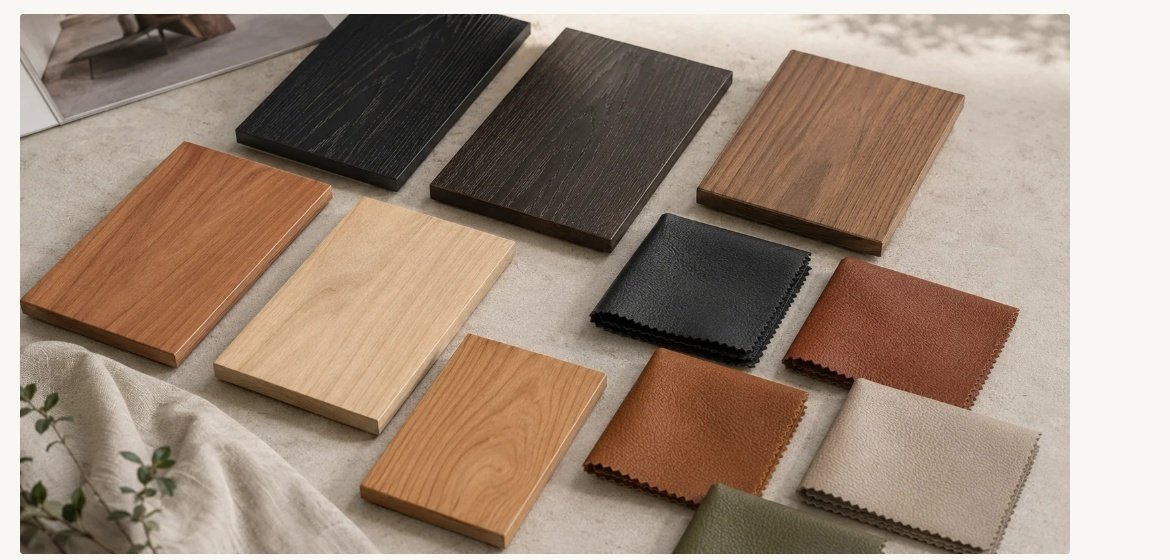
For many solid wood products, the frame can be finished in different color directions using an approved sample, finish board, or other reference. This helps wholesalers adapt one product family to different markets without redesigning the frame.
However, a color name is not enough. Buyers should confirm the wood species, color reference, transparency, sheen, surface feel, and acceptable natural variation. The detailed approval logic is covered in How to Choose a Wood Finish for Solid Wood Furniture.
Upholstery Material and Color Are Also Common Regular Options
For upholstered dining chairs, leisure chairs, benches, and selected sofas, fabric or leather-look materials can often be reviewed without changing the core product structure.
The buyer should still confirm:
- material type and supplier code
- color reference
- whether the material is from the supplier’s regular selection or must be specially sourced
- quantity per color or material
- any buyer-specific performance or testing requirement
A special fabric may create its own material minimum even when the furniture structure is unchanged. That is why regular customization is simpler, but not automatically free from MOQ considerations.
Size Changes Can Be Simple—or Structural
A small dimension change may look easy on paper, but its production impact depends on the product.
Changing a table length while keeping the original structural logic can be very different from changing a chair seat width, back angle, frame thickness, or joint position. The first may be mainly dimensional; the second can affect comfort, strength, tooling, packing, and the full production setup.
For Nestul, selected standard dining tables or larger tables, large sofas, and beds can be reviewed for size adjustment based on the original structure without the usual customization MOQ, with an RMB 600 customization fee. This exception does not apply to unlimited structural or material changes.
Structural Changes Usually Need MOQ-Based Review
Structural customization includes changes to load-bearing parts, frame geometry, joint design, assembly method, support systems, hardware positions, or other construction details.
These changes can affect drawings, machining, jigs, material usage, sampling, quality-control points, and packing. Because they alter the product rather than simply its appearance, they usually require a higher level of review than a finish or fabric change.
Changing the Wood Species Can Change More Than the Look
A buyer may want to change ash to oak, walnut, beech, or another species for market positioning. That can be possible, but it should not be treated as a color substitution.
Different species vary in density, grain, color, machining behavior, finish response, sourcing conditions, and cost. The supplier may need to review dimensions, construction details, finish references, and material purchasing before confirming the change.
For a material comparison example, see Ash vs Oak for Furniture.
Major Style Changes Are Closer to Product Development
Changing leg shape, backrest form, arm design, upholstery profile, drawer layout, tabletop edge, or other major visual features can move the order away from a standard product.
The more the request changes the original design and production route, the more likely it is to need:
- new drawings or dimensions
- sample development
- new tooling or jigs
- different material purchasing
- new packing review
- a higher MOQ
Reference-Image Requests Need More Information Than the Image
A reference image communicates a design direction, but it does not define a complete production specification.
To review a new product properly, send the image together with the intended dimensions, material direction, quantity, application, finish, upholstery, and any structural requirements already known. The supplier can then explain what is feasible, what needs sampling, and what MOQ applies.
If you are preparing this type of request, the Furniture RFQ Checklist gives a practical structure for the information suppliers need before quoting.
Nestul’s Current MOQ Logic for Deeper Changes
For deeper changes such as size, structure, wood material, or major style modification, Nestul currently uses the following working reference:
- Dining chairs: typically 50+ pieces.
- Tables, leisure chairs, and coffee tables: typically 30+ pieces.
These are not universal furniture-industry rules. Final feasibility depends on the specific product, requested change, material, and order structure. The reasons behind changing MOQ are explained in Furniture MOQ Explained.
What Buyers Should Avoid Customizing on the First Order
A first order becomes harder to evaluate when too many variables change at once.
- Do not change size, structure, wood species, finish, and upholstery simultaneously unless the business case justifies full development.
- Do not use trial-order quantity to test a product that requires major new tooling or an entirely new structure without discussing development cost.
- Do not approve major changes only from messages; update the drawing, specification, or sample reference.
- Do not assume one MOQ applies to every model and every custom option.
A Better Way to Plan Custom Furniture Orders
- Start from the closest standard product.
- List the changes in order of commercial importance.
- Separate appearance changes from structural changes.
- Confirm quantity per model and per option.
- Ask which changes affect MOQ, sample cost, lead time, and packing.
- Approve the final specification before bulk production.
If you already have a standard product to adjust, send the model, quantity, finish, upholstery, and any size or structural changes through the Nestul inquiry page. The request can then be separated into regular options and MOQ-based changes before quotation.
Wholesale Furniture Customization FAQ
Can finish color be customized without changing the product structure?
Usually, yes. Finish color is one of the most common regular options, subject to the product, quantity, approved reference, and production feasibility.
Can upholstery material and color be changed?
Usually, yes. Buyers should confirm the material source, color, quantity per option, and any performance or testing requirement that applies to their market.
Do size changes always require a higher MOQ?
No. It depends on whether the size change affects the product structure. Selected larger standard products at Nestul have a size-adjustment exception, while deeper structural changes require separate review.
Can the wood species be changed?
It can be reviewed, but a wood-species change may affect cost, construction, finish, sourcing, and MOQ. It should be confirmed as a material change rather than treated as a color option.
Can furniture be developed from a reference image?
Suitable requests can be reviewed. Clear dimensions, material direction, quantity, application, and finish requirements make feasibility and quotation much easier to assess.