For restaurants and cafés, the first bar-stool decision is seat height—not style. Match the stool to the actual counter or bar surface, then evaluate footprint, back support, footrest, frame construction, upholstery, finish, floor protection and how easily the model can be reordered.
A bar stool that looks right in a catalogue can still be wrong for the space if the seat sits too high or low, the base occupies too much circulation space, or the finish and upholstery do not suit daily commercial use.
Measure the Counter Before Selecting the Stool
Do not choose a stool from its overall height alone. The important dimension is the seat height compared with the finished top of the counter or bar.
Commercial projects can use different surface heights, so the safest process is to record the actual counter height and confirm the required sitting clearance with the designer or buyer. Avoid assuming that every “counter stool” or “bar stool” uses the same dimensions.
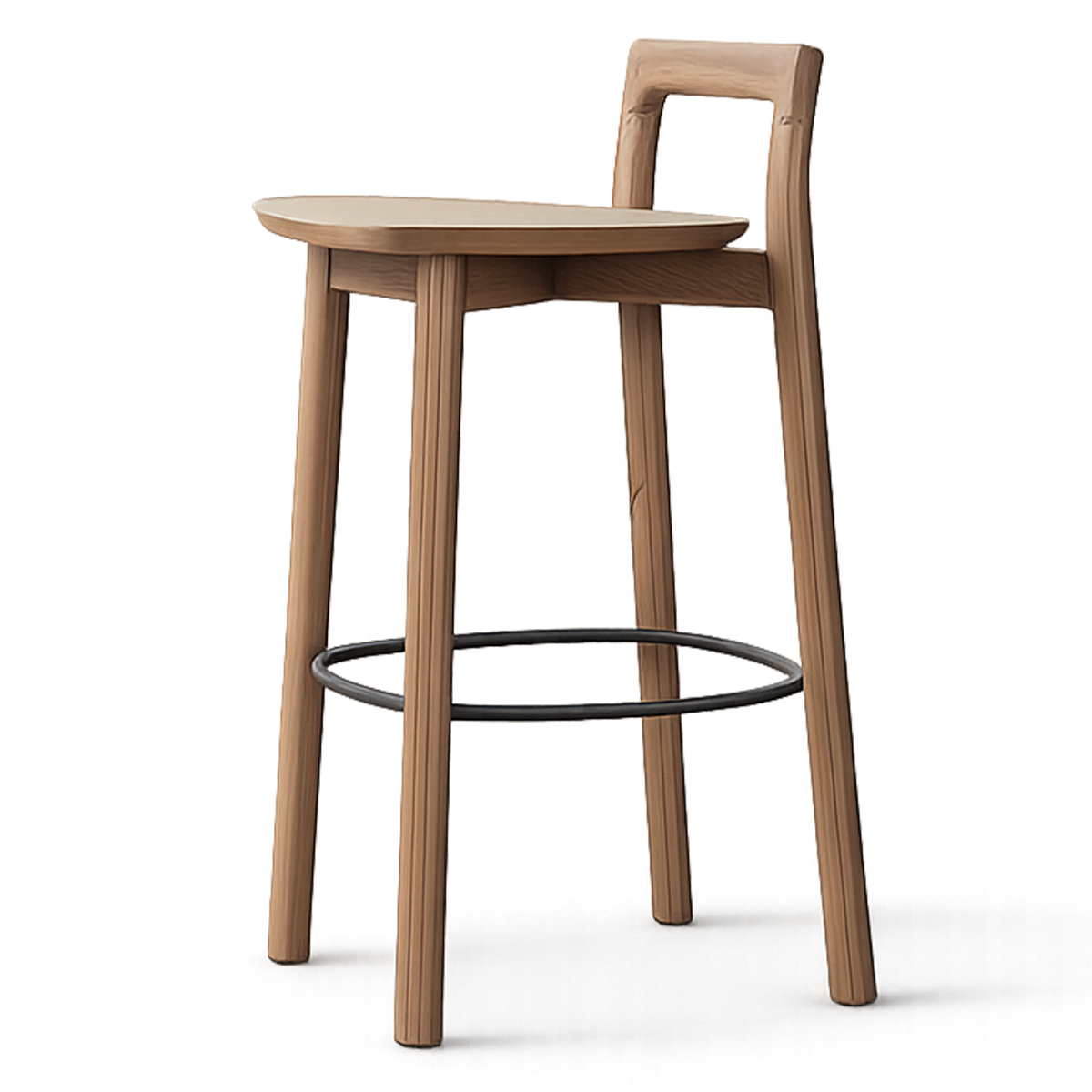
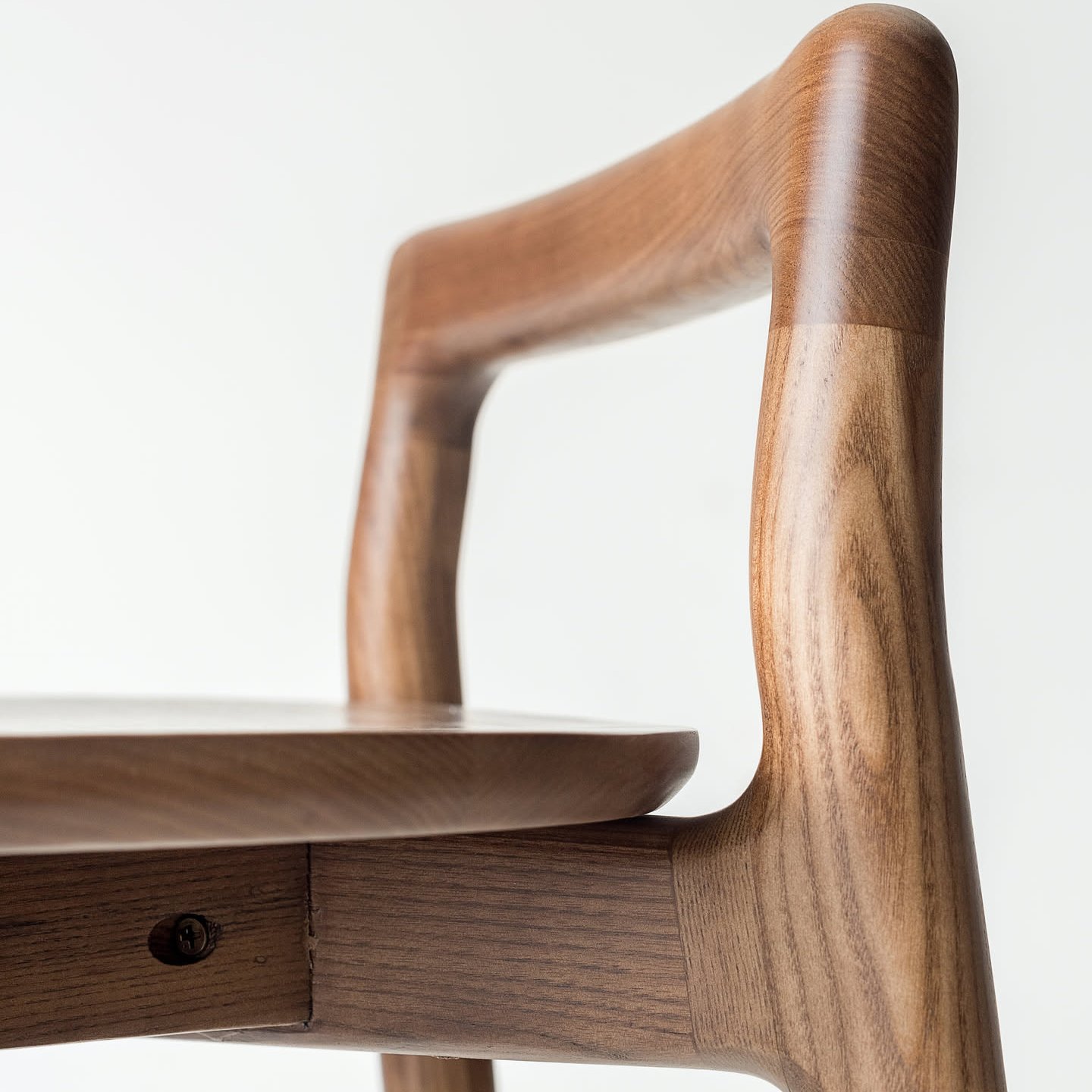
Nestul’s current catalogue illustrates this variation: the NT-082 Qingshan High Bar Chair has a 65 cm seat height, while the NT-116 Xubai Bar Chair has a 75 cm seat height. These are product examples, not universal rules.
Check the Footprint, Not Only the Seat Width
The stool needs enough room for the user, but it also has to work with aisle clearance, counter spacing and staff circulation.
Confirm:
- overall width and depth
- distance between stools at the counter
- whether arms project into circulation space
- how far the stool sits out from the counter when occupied
- whether staff need to move or stack the stools regularly
A compact stool can increase layout flexibility, but compact dimensions should not come at the expense of stable construction or an uncomfortable sitting position.
Backless, Low-Back or Full-Back: Choose by Dwell Time
Backless stools are visually light and can tuck under some counters, but they provide less support. A backed bar chair can be more appropriate where guests are expected to stay longer.
The choice should reflect the hospitality format:
- quick-service counters may prioritize compactness and easy movement
- bars and dining counters may benefit from more back support
- hotel or lounge settings may place more emphasis on comfort and upholstered surfaces
There is no universal commercial answer. The buyer should match the support level to expected sitting time and layout.
A Footrest Is a Functional Component
At bar height, many users cannot place their feet comfortably on the floor. The footrest therefore affects both comfort and how the chair frame is loaded during use.
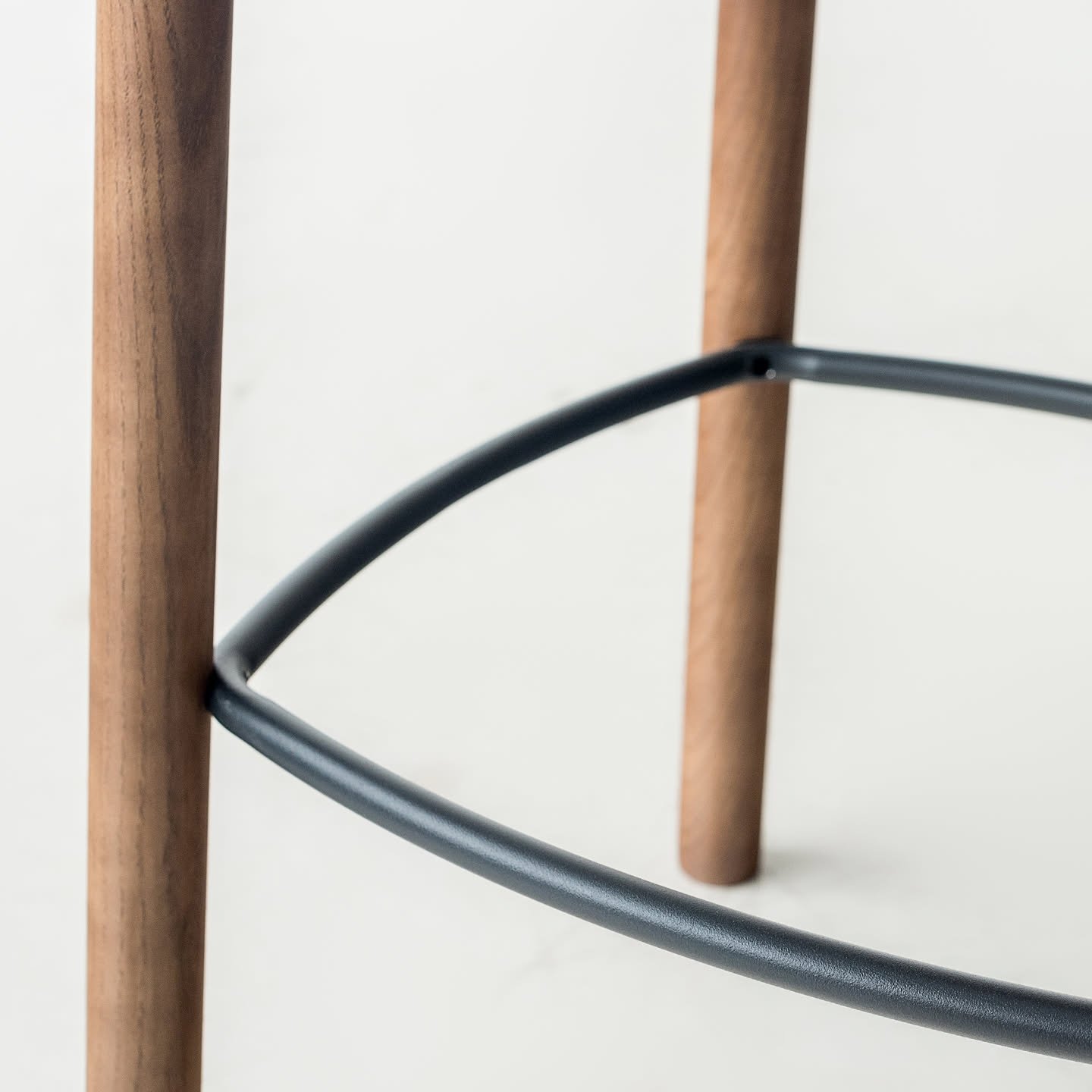
Check the footrest position, connection to the frame and material. If a metal footrest is used with a wood frame, confirm the attachment and finish so repeated footwear contact does not create an avoidable maintenance problem.
Review the Frame for Repeated Commercial Handling
Restaurant and café stools are repeatedly pulled, rotated, leaned on and moved for cleaning. Review the complete frame rather than judging commercial suitability from product weight alone.
- leg and stretcher connections
- seat-to-frame connection
- backrest connection on backed models
- footrest attachment
- floor glides or contact points
If a project requires a specific commercial seating test, loading criterion or local standard, give the supplier the exact requirement before quotation or sampling. A product label such as “bar chair” or “commercial stool” does not prove compliance with every project requirement.
Choose Wood and Finish for the Intended Visual Position
Exposed solid wood makes the frame part of the customer-facing design. Species, grain and finish should therefore match the venue and the rest of the furniture program.
Nestul’s NT-082, NT-113 and NT-116 are examples of ash-based bar seating in the current catalogue. Their structures and upholstery differ, showing that buyers can keep a related material direction while selecting different seat formats.
For finish approval, confirm color, sheen, surface feel and acceptable natural variation. See How to Choose a Wood Finish for Solid Wood Furniture.
Upholstery Changes the Cleaning and Maintenance Plan
Upholstery can improve comfort and introduce color, but it also changes cleaning, stain, wear and replacement requirements.
For commercial projects, confirm the exact upholstery material and any buyer-required abrasion, flammability or other performance documentation. Those requirements vary by market and project, so they should not be assumed from a generic material name.
If you are deciding between fabric, PU leather and genuine leather for a chair program, see How to Choose Upholstery for Wholesale Dining Chairs.
Floor Glides Matter More on High Seating Than They Look
A stool is often moved by pulling it across the floor. Confirm the glide material and whether replacements are available. The right solution depends on the actual floor—tile, timber, stone, vinyl, carpet or another surface.
Do not assume one glide works equally well everywhere. If the project has a floor-protection requirement, include it in the order specification.
Think About Replenishment Before Opening Day
Restaurants and cafés may need replacement seating after opening or may expand to additional locations. A visually distinctive stool is more useful commercially when it can be identified and reordered later.
- keep the product code
- retain finish and upholstery references
- record any custom dimensions or structural changes
- confirm replacement glides or hardware where relevant
- keep packing and carton information for later replenishment
The same repeat-order principle applies to dining chairs. See How to Choose Solid Wood Dining Chairs for Restaurants and Cafés.
Bar Stool Buying Checklist for B2B Orders
- counter or bar surface height
- seat height
- overall width and depth
- back support and expected dwell time
- footrest position and construction
- frame and joint details
- wood species and finish
- upholstery and cleaning requirements
- floor glides
- buyer-specific testing or documentation
- MOQ and quantity per option
- repeat-order references
Final Takeaway
Choose restaurant and café bar stools from the surface height outward: first seat height, then footprint, support, structure, materials, finish and maintenance. Commercial suitability comes from the complete specification, not from a style label.
Browse Nestul solid wood seating or reference models such as NT-082 Qingshan High Bar Chair when preparing an inquiry. Send the required quantity, counter height, finish, upholstery and destination requirements through the contact page for quotation review.
Restaurant Bar Stool FAQ
What bar stool seat height should I choose?
Measure the actual finished counter or bar height and select the stool to provide a comfortable sitting clearance. Do not rely only on the words “counter height” or “bar height.”
Are backless stools better for cafés?
They can save visual and physical space, but backed stools may be more comfortable for longer sitting. The better option depends on the service format and layout.
Does a heavier stool mean it is more suitable for commercial use?
No. Weight alone does not define structural suitability. Review the frame, joints, footrest, materials, floor contact and any required commercial test.
Can bar stool finish and upholstery be customized?
Regular finish and upholstery adjustments may be available on suitable products. Deeper structural or material changes should be reviewed against quantity and production feasibility.