A strong wholesale solid wood furniture line is usually built around a controlled product system, not the largest possible catalog. Start with a clear target customer, choose a small number of anchor products, standardize the core material and finish direction, create a deliberate price and style structure, and keep enough continuity for repeat orders.
For distributors, the commercial goal is not simply to buy attractive furniture. It is to build a range that can be presented, stocked, reordered, expanded, and managed without creating unnecessary SKU and supplier complexity.
1. Define the Customer Before the Product List
Start with the buyer and channel you are serving.
- independent furniture retailers
- online furniture stores
- restaurant and café suppliers
- interior design resellers
- regional distributors
- selected project buyers
The same chair collection can be too premium for one channel, too basic for another, or wrong in size and finish for a third. Product selection becomes easier once the target price level, style, use case, and order pattern are clear.
2. Build Around a Few Anchor Products
Anchor products are the items that explain the collection quickly and are most likely to generate repeat orders.
For a solid wood line, a practical starting structure may include:
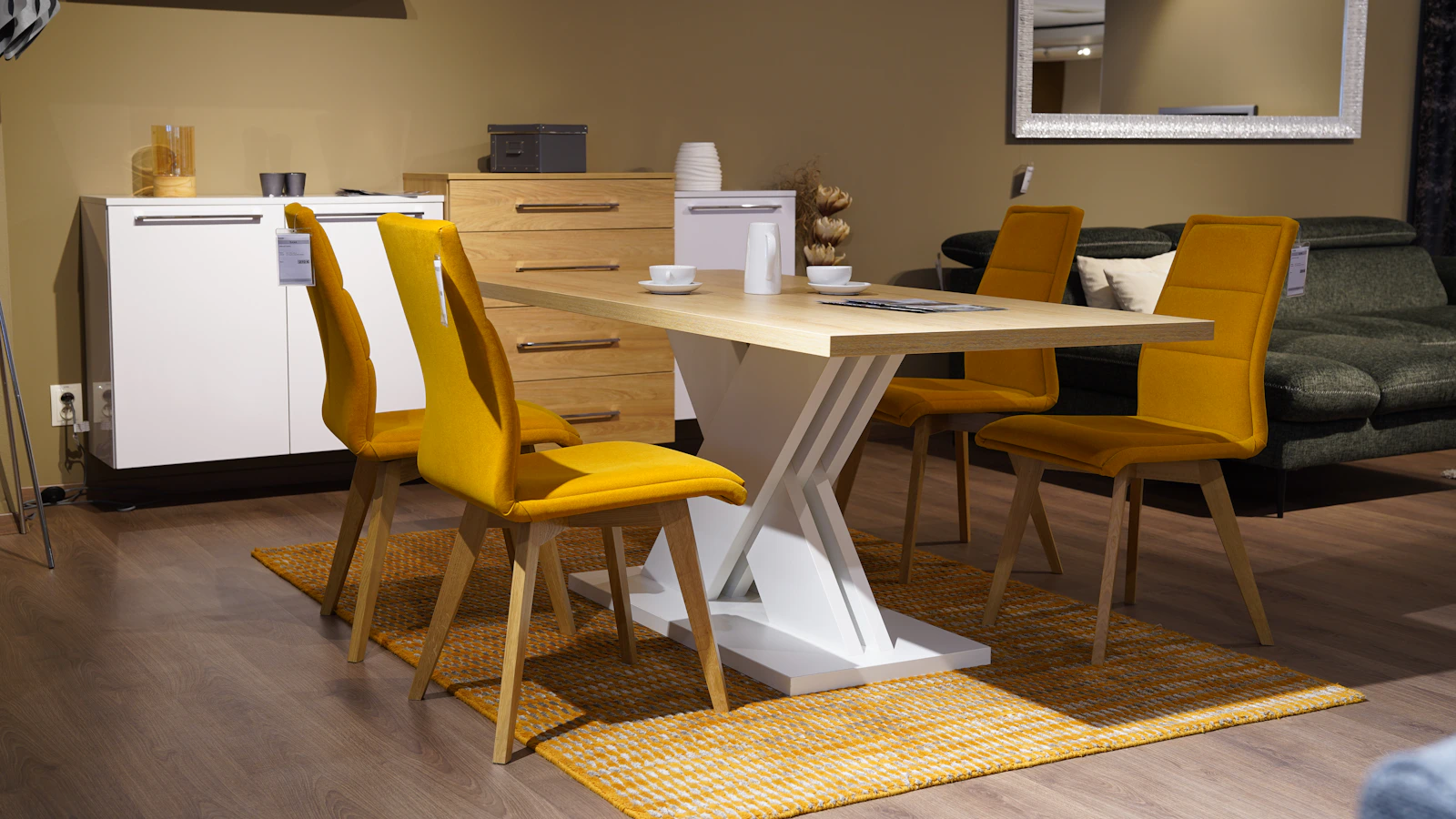
- two to four dining-chair families
- one or two leisure-chair directions
- a small table program that visually connects to the seating
- selected coffee or occasional tables where they support the same material story
The exact number depends on the market. The important point is to avoid launching twenty disconnected SKUs that cannot share finish, photography, stock logic, or repeat-order planning.
3. Use a Clear Material Direction
A distributor can offer several materials, but the first line is easier to manage when the core products share a recognizable material direction.
For Nestul’s core solid wood supply, North American ash is an important material focus across chairs, leisure chairs, and tables. This supports a consistent visual language and makes it easier to develop related finishes across several products.
Material choice should still match the market. Buyers comparing species can review Ash vs Oak for Furniture and Solid Wood vs Engineered Wood Furniture.
4. Create a Controlled Finish System
Too many finishes can create visual confusion, smaller production batches, more samples, and more complicated stock management.
A distributor can begin with a small finish architecture:
- a light or natural finish
- a medium warm finish
- a darker commercial finish
- one painted or special direction only where the market needs it
The exact colors are less important than having a controlled approval system. Keep the finish reference, sheen, and acceptable natural variation for each range. See How to Choose a Wood Finish.
5. Use Upholstery to Expand the Range Without Redesigning the Frame
For upholstered chairs and leisure chairs, changing the fabric can create meaningful market variety without developing a new frame.
A practical upholstery system might include a neutral commercial fabric, a warmer residential fabric, and a limited number of accent colors. Keep the material codes organized so replacement and repeat orders do not depend on visual memory.
6. Build a Price Ladder Without Creating a Random Catalog
A product line normally needs more than one price point, but every price level should still fit the same buyer.
For example, a distributor might use:
- an entry dining chair with simple construction
- a mid-range upholstered chair
- a more distinctive sculptural or lounge-oriented chair
- tables that support the same finish and material language
The objective is not “cheap, medium, expensive.” It is to create commercially different reasons for each SKU to exist.
7. Control SKU Growth From the Beginning
One chair in four finishes and six fabrics can quickly become twenty-four SKU combinations before adding sizes or table options.
For a first wholesale launch, limit the combinations that will actually be stocked or promoted. Additional finish and upholstery options can remain available by order rather than appearing as stocked SKUs.
This also helps the factory. Concentrated quantities are usually easier to produce than the same total quantity fragmented across many small variants. The MOQ logic is explained in Furniture MOQ Explained.
8. Use Customization for Market Adaptation, Not for Unlimited Development
Finish color, upholstery material, and upholstery color are often the most practical ways to adapt an existing product to a market.
Changes to size, structure, wood material, or major style details should be reserved for products where the commercial reason is strong enough to justify sample development and MOQ.
Review the difference in What Can Be Customized in Wholesale Furniture Orders—and What Usually Requires MOQ?.
9. Sample the Products That Carry the Most Commercial Risk
Not every SKU needs the same development process.
Prioritize full samples for products with new structures, critical comfort, unusual materials, or major customization. Use finish boards or material samples when the main decision is color or upholstery.
The decision framework is in Finish Swatch, Material Sample, or Full Furniture Sample.
10. Create a Repeat-Order File for Every Core SKU
A profitable distributor line depends on replenishment, not just the first container.
Keep a simple reference file containing:
- product code
- dimensions and construction
- wood species
- finish reference
- upholstery code
- approved custom changes
- packing method
- inspection records
- changes made after the first production batch
This reduces the chance that a repeat order is rebuilt from old chat messages.
11. Treat Packing as Part of the Product Program
Packing affects damage risk, warehouse handling, freight efficiency, receiving, and after-sales cost.
For each core SKU, record the carton configuration, internal protection, hardware position, carton marks, and any special reinforcement. If a product becomes a repeat seller, stable packing is part of repeatability.
12. Build the Sales Assets at the Same Time as the Product Range
A distributor line needs usable sales information, not only factory photos.
- clean product images
- product code
- dimensions
- materials
- finish and upholstery options
- MOQ
- packing data
- application guidance
These fields make it easier for sales teams, dealers, and ecommerce staff to present the same product consistently.
A Practical First-Line Structure
A distributor does not need a huge launch. A focused first range might include:
- 3–5 dining-chair models
- 1–2 leisure chairs
- 2–3 dining tables or table sizes
- 2–3 standard finishes
- a controlled upholstery selection
Those numbers are a planning example, not a universal rule. The right assortment depends on your channel, price level, market size, warehouse capacity, and order budget.
Final Takeaway
A wholesale solid wood furniture line becomes easier to sell and replenish when it has a clear material story, a controlled finish system, deliberate price points, limited SKU complexity, and repeat-order documentation.
Nestul’s core direction is solid wood furniture pieces for wholesale and distributor cooperation, with practical finish and upholstery options and deeper customization reviewed where the order justifies it. Browse the product categories or send your target market, quantity, product types, and price direction through the inquiry page to start building a focused range.
Wholesale Furniture Line FAQ
How many products should a new distributor launch with?
There is no universal number. A focused range is usually easier to manage than a very broad catalog. Start with enough products to create a clear assortment without fragmenting order quantity and stock.
Should every product have several finishes?
No. Too many finish combinations can create SKU and MOQ complexity. Keep a small standard palette and use additional finishes by order where commercially useful.
Is customization necessary for a distributor furniture line?
Not always. Standard products can form the core range. Finish and upholstery adjustments can provide market adaptation, while deeper structural changes should be used selectively.
What makes a product suitable for repeat orders?
Stable product identification, recorded specifications, retained finish and upholstery references, reproducible packing, and a supplier able to explain and control changes across later production batches.