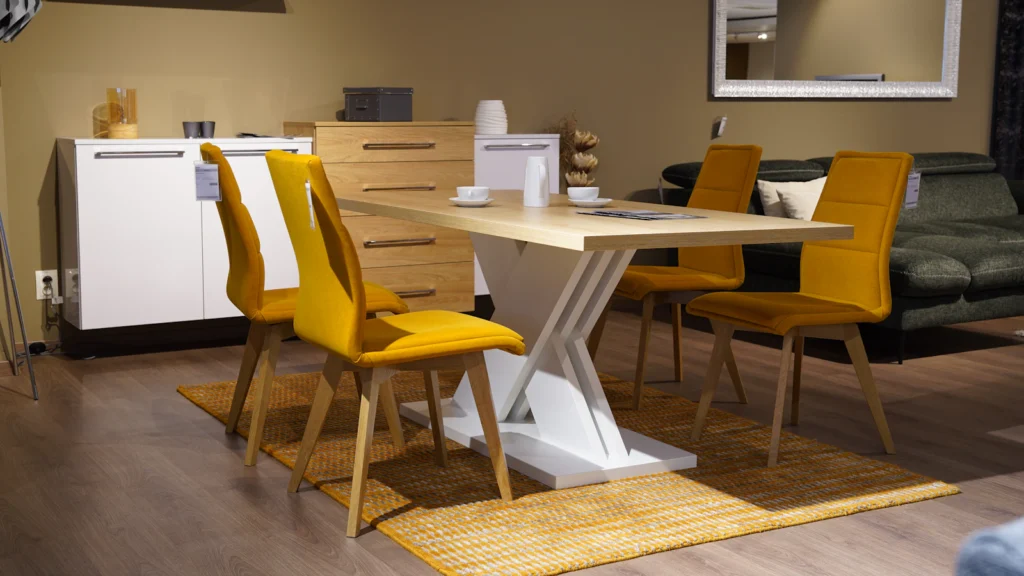
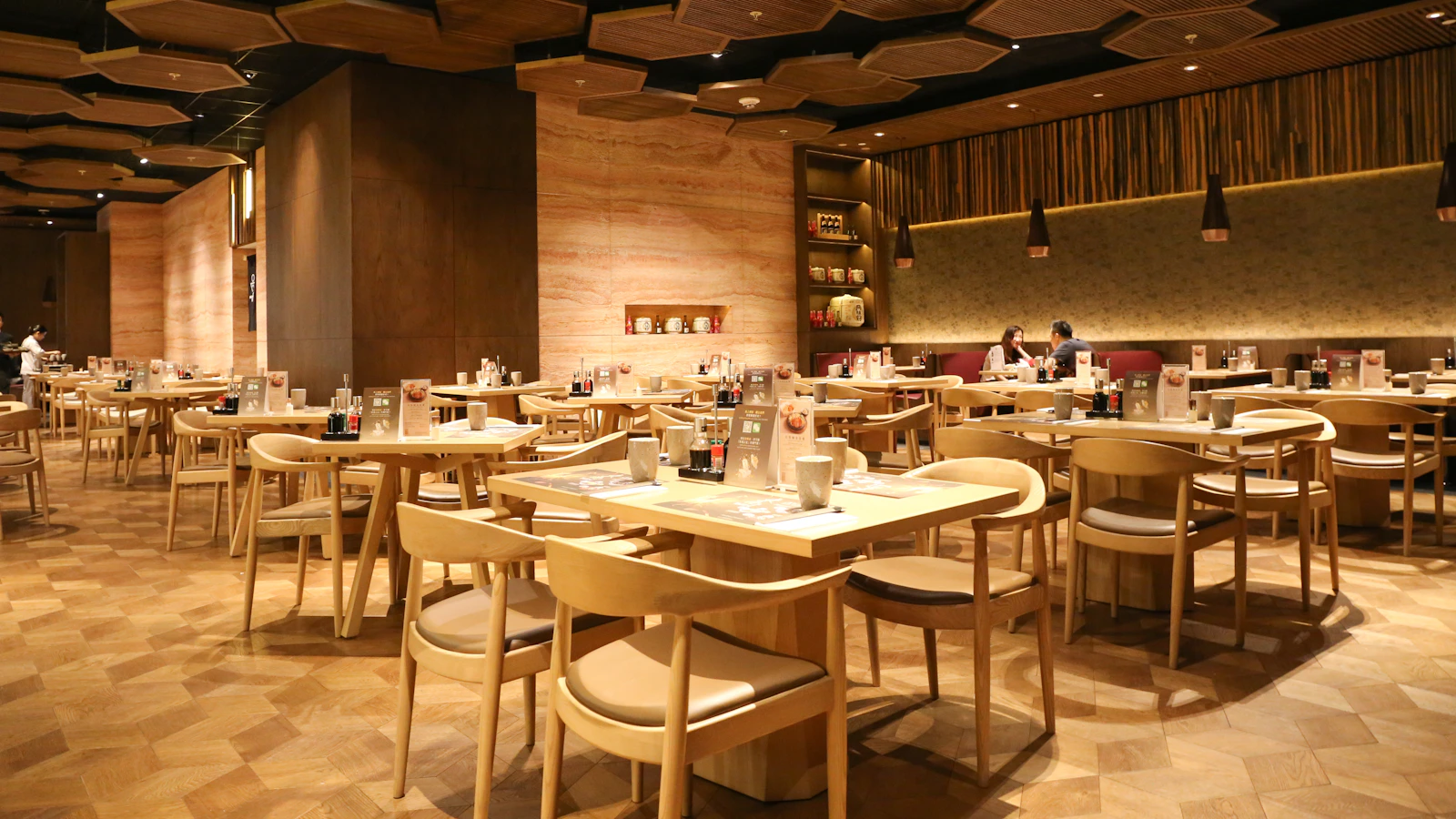
For restaurants and cafés, choose dining chairs by use intensity, space, comfort, cleanability, construction, finish, and repeat-order practicality—not by appearance alone. A chair that looks good in a product photo can still be wrong for a high-turnover dining area if it is too bulky, difficult to clean, hard to replace, or unsuitable for the buyer’s required commercial standard.
The most useful sourcing process starts with the application, then narrows the product style.
Start With the Restaurant or Café Layout
Chair dimensions affect more than comfort. They influence aisle width, table spacing, seat count, cleaning access, and how easily staff can move furniture during daily operation.
Before selecting a model, confirm:
- table height
- target seat height
- chair width and depth
- armchair versus armless chair requirements
- clearance between chair, table, and circulation routes
- whether chairs need to be moved frequently
For project layouts, do not rely only on a chair silhouette. Check the actual dimensions against the floor plan and table specification.
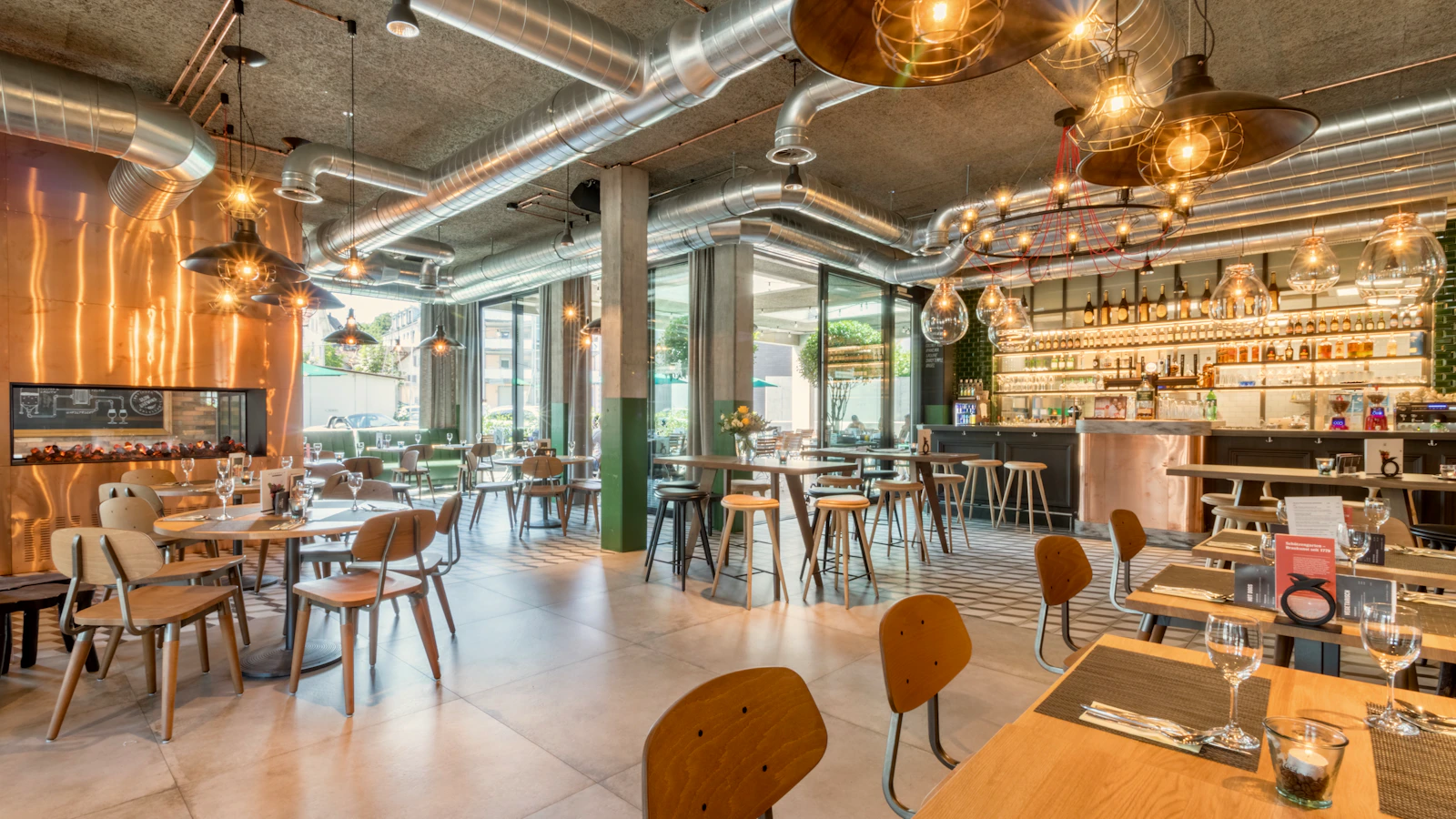
Prioritize a Structure That Fits Frequent Use
Commercial dining chairs can be moved, pulled, rotated, and cleaned many times during a service day. The buyer should therefore review the complete frame rather than only the visible style.
- main frame sections
- joint design
- seat support
- backrest connection
- hardware where used
- floor-contact points and glides
If the project or destination market requires a specific commercial furniture test, load test, flammability requirement, or other standard, confirm the exact method and acceptance criteria before ordering. A product being described as “commercial” should not be treated as proof that it automatically meets every market or project requirement.
Solid Wood Species Affects Appearance, Weight, and Product Position
For exposed wood frames, species matters because the customer can see and feel the material.
Ash is often useful for hospitality seating where buyers want a relatively light visual direction, strong visible grain, and a material that works well in chair construction. Oak can create a heavier, more recognizably oak visual identity. The better choice depends on the product design and market position.
For a deeper species comparison, see Ash vs Oak for Furniture.
Choose the Finish for Cleaning and Visual Maintenance
Restaurant chairs need a finish direction that works with the intended cleaning routine and the visual style of the space.
Dark finishes can create a strong hospitality look but may show dust, scratches, or edge wear differently from lighter tones. Natural finishes keep the wood character visible but make material variation more obvious. Matte, satin, and glossier surfaces can also change how wear and cleaning marks appear.
Do not approve only a color name. Confirm the color reference, sheen, surface feel, and acceptable variation. Use the wood-finish approval checklist before bulk production.
Upholstery Adds Comfort but Also Adds Maintenance Questions
An upholstered seat can improve comfort and soften the visual appearance of a solid wood chair. It also adds fabric selection, cleaning, staining, seam, foam, and replacement considerations.
For upholstered restaurant or café chairs, buyers should confirm:
- fabric or leather-look material
- color and texture
- cleaning method
- any buyer-required abrasion, flammability, or performance test
- whether the upholstered component can be serviced or replaced
Where a formal performance requirement applies, request the actual material test or supplier document needed for that project rather than assuming every upholstery option has the same specification.
Comfort Should Be Tested With the Real Table and Use Case
Comfort is not defined by cushion thickness alone. Seat height, depth, back angle, width, frame shape, and table relationship all matter.
For a standard model, dimensions and an existing sample may be enough to make a first decision. For a deeper custom chair, a full sample is more useful because the buyer can evaluate the complete sitting position. The sampling options are explained in Finish Swatch, Material Sample, or Full Furniture Sample.
Weight and Handling Matter to Staff
A very heavy chair can feel substantial, but it can also be harder for staff to move during cleaning, closing, layout changes, or events. A very light chair may be easier to handle but still needs the right frame and joint design for the intended use.
Ask for actual product weight after the model and materials are confirmed. Do not estimate handling performance from wood species alone.
Check Floor Protection and Contact Points
Restaurant and café chairs are repeatedly moved across hard flooring. Confirm the glide or foot solution and whether replacement parts can be supplied.
The correct glide depends on the floor material and project requirement. A universal glide is not automatically suitable for timber, tile, stone, vinyl, carpet, or polished concrete.
Think About Replacement and Replenishment Before the First Order
For a restaurant group, distributor, or hospitality buyer, the first delivery is not always the end of the product cycle.
- Can the same model be reordered later?
- Will the finish reference be retained?
- Can replacement glides, hardware, or upholstered parts be supplied?
- Is the product code stable enough to identify the chair six months later?
- Can the supplier reproduce the same packing and labeling?
These points often matter more to long-term hospitality purchasing than a small difference in the first unit price.
Control the SKU Count
A restaurant project may need several finishes or upholstery colors, but every additional option fragments the production batch and replacement stock.
For first orders, it is usually easier to concentrate quantity on fewer proven combinations. If deeper changes are required, review the MOQ logic in What Can Be Customized in Wholesale Furniture Orders.
A Practical Restaurant Chair Buying Checklist
- actual chair dimensions and seat height
- table compatibility
- frame and joint construction
- wood species and visible material standard
- finish color and sheen
- upholstery and cleaning requirement
- floor glides
- product weight
- project-specific testing or compliance requirements
- MOQ and quantity per finish
- replacement and repeat-order plan
- packing and pre-shipment inspection
Browse Nestul solid wood furniture categories if you are building a restaurant or café chair list. For a project review, send the target models, quantity, layout or dimensions, finish direction, upholstery needs, and destination requirements through the inquiry page.
Restaurant and Café Chair FAQ
Are solid wood chairs suitable for restaurants?
They can be, when the frame, joints, finish, dimensions, and required performance are suitable for the intended application. The buyer should confirm any project- or market-specific testing requirement separately.
Should restaurant chairs be heavier than residential chairs?
Not necessarily. Weight alone does not define commercial suitability. Structure, joint design, materials, handling, testing requirements, and actual use are more important.
Is upholstery practical in cafés and restaurants?
It can be, but the buyer should review cleaning, staining, wear, seams, cushioning, replacement, and any required material performance tests.
What should buyers test before a bulk chair order?
Check the actual chair dimensions, comfort, table relationship, structure, finish, upholstery, floor-contact solution, and any formal test required by the project or destination market.